
Your Cart is Empty


- Champagne
- Gifts & Hampers
- Whisky & Spirits
- Wine
- Caviar & Gourmet
- Same-Day Delivery
- Beer
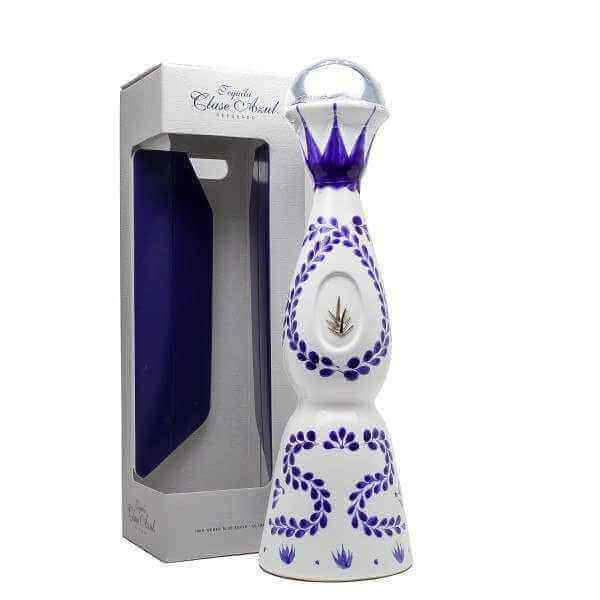
A large share of Clase Azul's price is the bottle, not the liquid. Every decanter is hand-made and hand-painted by artisans in Santa María Canchesdá, Mexico, and no two are identical. Add slow-cooked agave, small production volumes and deliberate luxury positioning, and you have a tequila bought as much for the object as for what is inside it.
That is not a criticism, but it is worth understanding before you spend. Here is what the money actually buys.
Each Clase Azul decanter is made and decorated by hand. The ceramic is formed, fired, glazed and then hand-painted, a process involving a community of artisans rather than a production line. The signature Reposado bottle — white, with cobalt blue detailing — takes days rather than minutes, and small variations between bottles are inherent to the method.
The commercial consequence is straightforward: the packaging cost per bottle is a large multiple of what a glass bottle costs, and it does not fall much with volume, because hand-work does not scale the way machinery does.
It also explains why the empty bottles are kept. Walk into enough bars and homes and you will find Clase Azul decanters repurposed as vases and lamps. Few spirits have packaging with an afterlife, and that afterlife is part of what people are buying.
The tequila is made from 100% Tequilana Weber blue agave in Jalisco. The agave is slow-cooked in stone ovens over roughly three days, which is far slower than the industrial diffuser processes used at the volume end of the category, and it produces a sweeter, more rounded spirit.
The expressions differ mainly in ageing:
| Expression | Approx. ageing | Character | Decanter |
|---|---|---|---|
| Plata | Unaged | Clean, sweet cooked agave, citrus | Simple glass |
| Reposado | Around 8 months | Vanilla, caramel, soft oak | Hand-painted ceramic — the signature |
| Añejo | Around 25 months | Richer, toffee, dried fruit, spice | Hand-painted, more elaborate |
| Ultra | Around 5 years | Extra añejo, deep and oak-driven | Silver and agave-fibre detailing |
The step up in price between expressions outpaces the step up in ageing, because the decanters become more elaborate as you climb the range. You are paying for both at once.
It depends entirely on what you want from it.
As a gift, it is hard to beat. It arrives looking like an occasion, the recipient recognises it instantly, and the bottle stays on the shelf long after it is empty. Very few bottles at any price do that job as well.
As a drinking tequila judged purely on liquid per pound, it is not the best value on the shelf, and it would be dishonest to pretend otherwise. There are additive-free añejos and small-producer bottlings that deliver more complexity for less money — they simply arrive in ordinary glass. If you are buying for yourself, to drink quietly at home, your money goes further elsewhere.
Both things are true at once. The mistake is buying it for the wrong reason and then feeling short-changed.
Neat, at room temperature, in a copita or a small wine glass rather than a shot glass. Chilling mutes the cooked-agave sweetness that you have specifically paid for. Do not mix it — not out of snobbery, but because the qualities that justify the price disappear entirely under lime and triple sec. If you want a margarita, a good blanco will make a better one for a fraction of the cost.
Largely because of the decanter, which is hand-made and hand-painted by artisans in Mexico, with no two identical. Slow-cooked agave, small production volumes and luxury positioning account for the rest.
As a gift or a centrepiece bottle, yes — few spirits carry the same instant recognition or leave a decanter worth keeping. As pure value per pour, there are additive-free añejos that offer more complexity for less.
Reposado is aged around 8 months and tastes of vanilla, caramel and soft oak. Añejo is aged around 25 months and is richer, with toffee, dried fruit and spice, in a more elaborate decanter.
No. Serve it neat at room temperature in a copita or small wine glass. Chilling mutes the cooked-agave sweetness that you are paying for.
Browse the Clase Azul range, other añejo tequilas, or see how tequila delivery works — same day across London, next day UK-wide. More spirits answers are on our questions answered page.
Deliveries are to over-18s only under our Challenge 25 policy. Please drink responsibly.