
Your Cart is Empty


- Champagne
- Gifts & Hampers
- Whisky & Spirits
- Wine
- Caviar & Gourmet
- Same-Day Delivery
- Beer
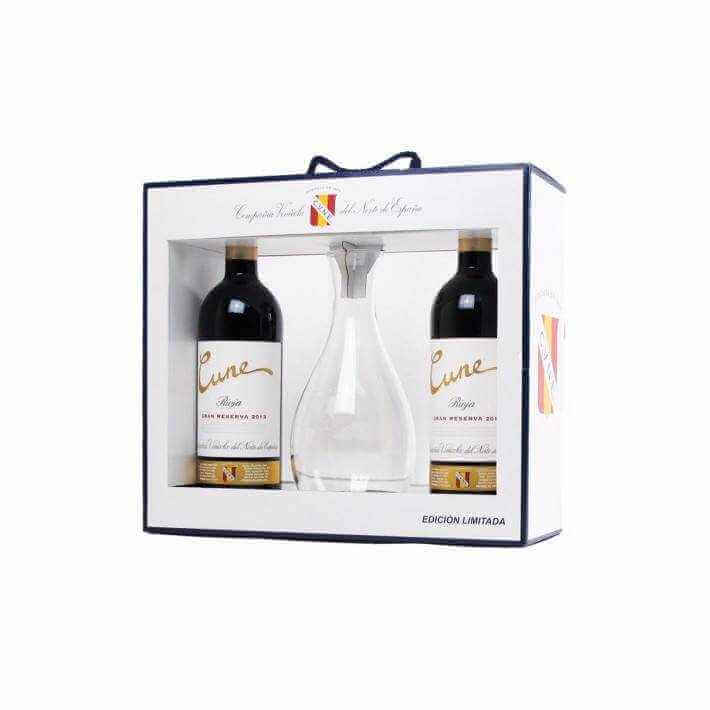
Rioja is the most recognisable red wine region in Spain and one of the few places in the world where the label tells you something genuinely useful about what is inside the bottle. Most wine classifications describe where the grapes grew. Rioja describes how long the wine was aged before it reached you, which is a far more direct clue to how it will taste tonight.
This Rioja wine guide covers what those classifications actually mean, how the region has changed in the last twenty years, and how to pick a bottle for a specific meal rather than at random.
Generico or Joven is the entry level with no minimum oak ageing. Expect bright, juicy red cherry and plum with little or no oak influence. Serve slightly cool and drink it young. It is the Rioja for a Tuesday.
Crianza requires a minimum of two years of ageing, of which at least one is in oak barrels. This is the sweet spot for value across the whole region. The oak has begun to soften the tannin and add a vanilla and light coconut edge from American oak, but the fruit is still forward and lively. It is the most food-flexible tier and where most people should start.
Reserva requires three years total with at least one in oak, and in practice most good producers exceed those minimums considerably. Here the wine moves from fruit-led towards savoury. Expect dried strawberry, tobacco leaf, leather, sweet spice and a longer, more resolved finish. This is the tier for a proper Sunday roast.
Gran Reserva requires five years total, at least two in oak and two in bottle, and is only made in vintages the producer judges strong enough. These are wines of tertiary character: dried fig, cedar wood, forest floor, cured meat, with tannin that has largely melted away. They are also released ready to drink, which is unusual and one of the great practical virtues of Rioja. You are not buying something that needs another decade in a cellar.
The single most distinctive thing about traditional Rioja is American oak. Barrels of American white oak give strong vanilla, dill and coconut notes, far more overtly sweet-smelling than French oak, which contributes finer-grained spice and a subtler toast. For most of the twentieth century Rioja was aged almost entirely in American oak, and that coconut and vanilla signature is what many people mean when they say a wine tastes of Rioja.
Since the 1990s a great many producers have moved partly or wholly to French oak, producing wines that are darker, more concentrated and more modern in style, sometimes labelled as alta expresion. Neither approach is better. But it does mean two bottles both labelled Reserva can taste startlingly different, so it is worth noticing which producers you enjoy rather than relying purely on the classification.
Rioja Alta, in the west at higher altitude, gives the most structured, elegant and age-worthy wines with firm acidity. Most classic Reserva and Gran Reserva bottlings come from here.
Rioja Alavesa, on the north bank of the Ebro with limestone soils, produces perfumed, fine-boned wines with a distinctly floral lift. Many of the most exciting modern single-vineyard wines are Alavesa.
Rioja Oriental, formerly Rioja Baja, is warmer and lower, and Garnacha thrives here. The wines are rounder, riper and higher in alcohol, and increasingly good as growers move to older vines and cooler sites.
White Rioja is one of the best-value serious white wines available anywhere. Made from Viura, the unoaked style is crisp, citrus-led and neutral in a useful way. But the barrel-fermented and aged style, which was nearly extinct in the 1990s, is remarkable: nutty, waxy, honeyed and long, and it ages for decades. If you have never tried an aged white Rioja, that is a genuine gap worth filling.
Rosado from Rioja tends to be deeper coloured and fuller than Provencal-style pink, with more strawberry and structure. It is a much better match for barbecue and grilled food than a very pale rose.
Serve red Rioja at 16 to 18 degrees, which in a typical warm British living room means twenty minutes in the fridge before opening, not after. Decant a young Crianza or a modern-style Reserva for half an hour, but be gentler with an old Gran Reserva, which can lose its delicate tertiary aromas quickly. If a bottle is more than fifteen years old, stand it upright for a day first so the sediment settles and pour carefully.
Glassware matters here more than for most reds. Use a decently sized bowl so the perfume has room to develop. A cramped glass flattens exactly the aromatic complexity you paid for.
If you are cooking something tomato-based, grilling, or eating tapas, a Crianza is the right call. For a roast, a Reserva. For a special occasion where the food is deliberately simple, a Gran Reserva. If you are buying for a group with mixed tastes, a Crianza is the safest bottle on any Spanish shelf because it pleases both the fruit-forward drinker and the traditionalist.
Browse the red wine collection or the broader wine range to see what is in stock, and if you are putting together a case for a dinner, a mix of one Crianza and one Reserva gives you options across the evening.
Realised at eight on a Friday that you have nothing decent open? We deliver across London inside the M25 in 30 to 45 minutes, 24 hours a day, every day of the year. Check the areas we cover and get something proper on the table.
Please drink responsibly. Drinks House 247 operates a Challenge 25 policy - you must be 18 or over to order, and our drivers will ask for photo ID if you look under 25.
Comments will be approved before showing up.


