
Your Cart is Empty


- Champagne
- Gifts & Hampers
- Whisky & Spirits
- Wine
- Caviar & Gourmet
- Same-Day Delivery
- Beer
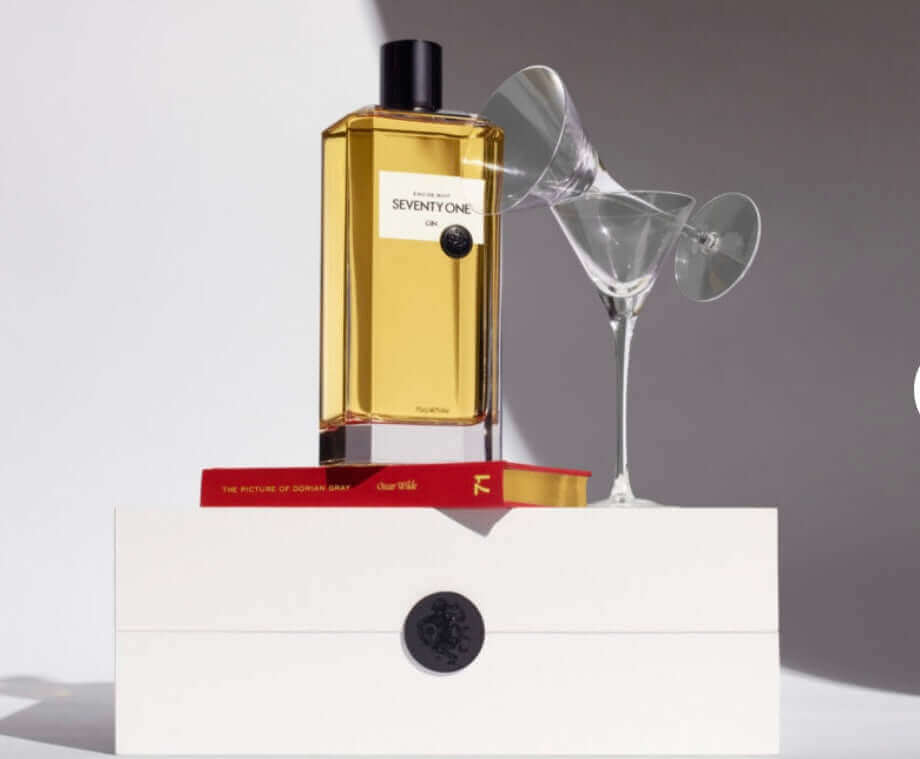
The reputation of frozen cocktails is unfairly poor in Britain, largely because most of us have only encountered them as a luminous slush from a machine at a beach bar. Made properly, a blended drink is one of the genuinely great hot-weather formats: it cools you from the inside, it drinks slowly, and the texture does something no shaken drink can manage.
The reason most home attempts disappoint is not the recipe but the physics. Frozen cocktails are a different technical problem from stirred or shaken ones, and once you understand what changes, the results improve immediately.
Human taste perception drops sharply as temperature falls. Sweetness fades first, acidity follows, and aromatic compounds become far less volatile, which means less of them reach your nose. On top of that, blending introduces melted water, so the drink is diluted more than a shaken one and served at a temperature where you can taste it less.
The fix is to overbuild. Take a recipe you like and increase the sugar and the citrus by somewhere between a fifth and a third. Taste the unfrozen mixture before it goes in the blender: it should taste slightly too sweet and slightly too sharp at room temperature. If it tastes correct at that stage, it will taste of almost nothing once frozen.
Spirit strength matters too. Alcohol lowers the freezing point of the mixture, so a drink with more spirit will stay softer and scoopable, while a low-alcohol version freezes hard and separates. Around 20 to 25 per cent of the total liquid being spirit is a reasonable target for a blended drink that holds its texture.
This single change transforms consistency. Use kitchen scales and start at 170 g of ice for every 100 ml of total liquid, then adjust for your own blender. Too little ice and you get a loose, soupy drink that separates into liquid and foam within two minutes. Too much and you get a stiff, pale mixture that labours the motor and tastes of cold water.
Blend on the highest setting you have, for around thirty seconds, and stop as soon as the sound changes from a rattle to a smooth hum. That change in noise is the most reliable signal that the ice has broken down evenly. Blending for longer simply melts what you have just made.
If your blender struggles, add the liquid first and the ice second so the blades have something to move through. Cheap jug blenders cope much better with smaller, thinner ice cubes than with large solid ones.
A frozen daiquiri is the benchmark and the easiest to get right. Use 60 ml white rum, 30 ml lime juice and 20 ml sugar syrup with 190 g ice. The extra syrup relative to a shaken daiquiri is deliberate. White rum from the spirits range works better here than an aged one, since barrel character disappears almost entirely at these temperatures.
A frozen margarita wants 50 ml tequila, 25 ml lime, 20 ml orange liqueur and 10 ml agave syrup with 180 g ice. Salt the rim rather than salting the mixture, because a little salt at the lip does far more to sharpen the drink than salt dissolved through it.
A frozen wine slushie is the most underrated option for a garden. Blend 200 ml of a fruity red wine or rose with 150 g ice, 20 ml sugar syrup and a squeeze of lemon. It is closer to a sorbet than a cocktail and disappears alarmingly fast on a hot afternoon.
A frozen bitter spritz, made with 40 ml of an orange bitter aperitif, 60 ml prosecco poured in after blending, and 140 g ice, gives you the bitterness that most frozen drinks lack. Never blend anything sparkling, since the carbonation vanishes instantly and you will lose the pressure that makes it interesting. Fold it in at the end instead.
You do not need a blender at all. Mix the drink at roughly double its normal strength, since freezing dulls it further, and pour it into a shallow metal tray to a depth of no more than two centimetres. Metal conducts cold far better than plastic and will freeze it in half the time.
Every thirty minutes, drag a fork through the mixture to break the crystals apart. After two to three hours you have a coarse, spoonable ice with a crystalline texture that many people prefer to the smooth, homogenous result of a blender. It also holds up far longer in the glass, because the crystals melt individually rather than collapsing all at once.
This is the method to use for a party, since you can make it the day before and simply scrape portions out as needed.
Chill the glasses. A frozen drink poured into a warm glass loses its texture in under a minute, and ten minutes in the freezer makes a visible difference. Coupes and small tumblers work better than large ones, because a frozen drink served in a big glass is warm sludge by the time anyone reaches the bottom.
For a group, blend in batches of no more than four servings, because overloading the jug produces uneven texture. Keep the finished drinks in a metal bowl inside a larger bowl of ice while you make the next batch, and stir the mixture once before pouring.
Finally, taste every batch. Ice varies, fruit varies, and the mixture that was perfect at four in the afternoon may need another squeeze of lime by seven.
If you find yourself short of rum, tequila or ice halfway through the afternoon, we deliver across London inside the M25 in 30 to 45 minutes, 24 hours a day, alongside mixers and everything on the beer shelves. Check the areas we cover and get the glasses in the freezer while you wait.
Please drink responsibly. Drinks House 247 operates a Challenge 25 policy - you must be 18 or over to order, and our drivers will ask for photo ID if you look under 25.
Comments will be approved before showing up.