
Your Cart is Empty


- Champagne
- Gifts & Hampers
- Whisky & Spirits
- Wine
- Caviar & Gourmet
- Same-Day Delivery
- Beer
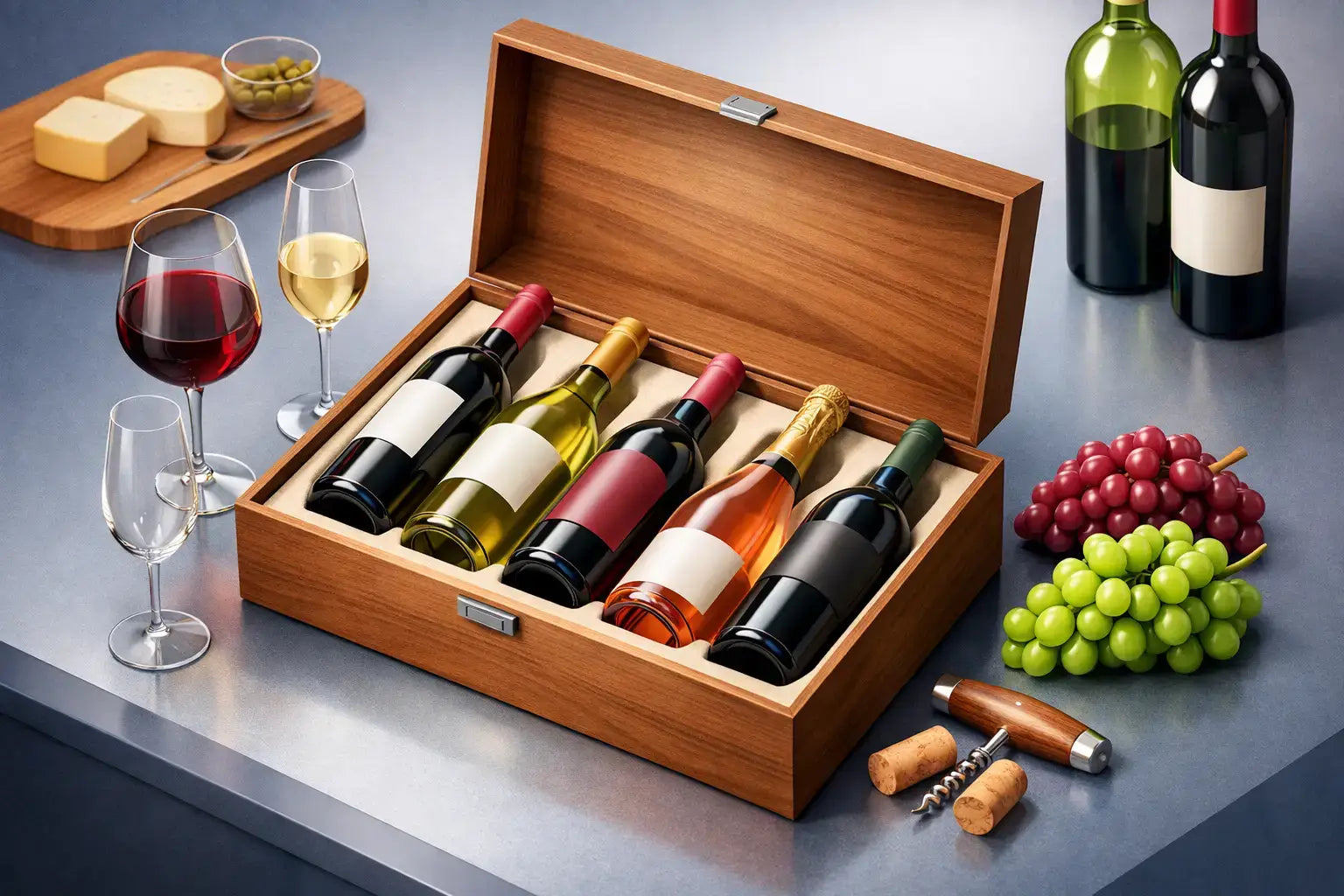
A fine wine mixed case can solve two very different problems at once. It can take the pressure out of buying for a dinner, gift or weekend away, and it can also give you a smarter way to buy better bottles without committing to a full case of one wine. If you want variety without dropping standards, this is usually the most practical place to start.
The appeal is simple. Fine wine should feel considered, not complicated. A mixed case lets you try classic regions, different grapes and a range of styles in one order, which is useful whether you are buying for your own table or sending a gift that needs to land well first time.
Buying a straight case of twelve bottles is ideal when you already know exactly what you like. Most people are not shopping like that every time. Sometimes you want a bottle for roast chicken, one for steak, one for a proper celebration, and a couple that can sit in the rack for later.
That is where a fine wine mixed case earns its place. It gives you range without forcing you into compromise. You can cover whites, reds and sometimes sparkling wine in one purchase, or stay within a tighter theme such as Bordeaux, Burgundy, Tuscany or grower Champagne.
There is also a financial advantage. Fine wine buying can become expensive quickly if you are experimenting one bottle at a time. A mixed case helps you taste across styles more efficiently. For newer buyers, that means fewer wrong turns. For more experienced drinkers, it is a practical way to restock with variety.
A good case is not random. It should feel curated, with clear logic behind the selection. That logic might be region, grape, vintage profile, food pairing or drinking window. If the bottles look impressive individually but make no sense together, it is not a strong mixed case.
Big names have their place, but balance matters more. A strong fine wine mixed case usually includes wines that offer different weights, textures and moods. You might want a mineral white for shellfish, a richer Chardonnay for a dinner party, a polished Pinot Noir for lighter dishes and a fuller Cabernet-based red for red meat.
If every bottle is dense, oaky and built for winter, the case is less useful than it looks. If every wine is lean and youthful, the same problem applies. Variety should be deliberate.
Region is often the quickest way to understand what a mixed case will deliver. A French-led selection may bring structure, restraint and ageing potential. An Italian case can offer freshness, savoury character and food-friendly reds. A New World selection might lean towards ripe fruit, open texture and earlier drinking.
None of those is better by default. It depends on who is drinking the wines and when. If you are buying for a mixed group, a broader regional spread usually gives you more flexibility. If you are buying for someone who already has clear taste, a tighter regional focus can feel more premium and more personal.
This is where many buyers get caught out. Fine wine does not always mean ready to drink tonight. Some bottles need time. Others are at their best young, while the fruit is fresh and the structure is not too firm.
If you want a case for near-term drinking, look for wines with approachability built in. That may mean softer tannins, integrated oak and a style that opens well without years in storage. If you are buying with a longer view, more structured Bordeaux, Barolo or top Rioja can make sense, but only if you are happy to wait.
A mixed case can do both, but it should be clear which bottles are for now and which are for later. That balance is especially useful if you want something to pour immediately while quietly building a better home selection.
A mixed case works particularly well as a gift because it feels generous without being predictable. One bottle can be forgotten. A well-selected case feels substantial, useful and worth opening over time.
For birthdays, anniversaries and thank-you gifting, the safest route is usually a case with broad appeal rather than highly niche wines. Well-made Champagne, elegant Bordeaux, polished Rioja, Chablis or premium Sauvignon Blanc tend to travel well across different tastes. If the recipient knows wine, you can be more specific. If not, classic regions with clear quality cues are usually the better call.
Presentation matters here as much as the liquid. A premium wine gift needs to feel considered from the moment it arrives. That is why mixed cases are often stronger than last-minute single-bottle gifts - they carry more presence and give the recipient choice.
Not every fine wine mixed case should do the same job. Buying for a housewarming is different from buying for a boardroom gift or stocking up for your own entertaining calendar.
For hosting, versatility matters most. You want wines that can move across starters, mains and whatever the guest list turns into. A balanced six- or twelve-bottle case with both white and red usually works hardest here.
For corporate gifting, label recognition and consistency matter more. You are not trying to challenge the recipient. You are trying to send something polished and dependable.
For personal drinking, you can be more ambitious. This is where mixed cases become useful for comparison - Left Bank against Right Bank, village Burgundy against regional Burgundy, mature-style Rioja against younger Ribera del Duero. That kind of side-by-side buying helps sharpen your palate without making the process feel academic.
Fine wine buyers are not only paying for rarity. They are paying for site, producer reputation, vintage conditions, élevage, ageing potential and track record. But price and value are not always the same thing.
A good mixed case should include wines that justify their place, not just their ticket. Sometimes a second wine from a strong Bordeaux estate gives you better drinking than a more famous label at twice the price. Sometimes a top regional Burgundy offers more pleasure than a disappointing village bottle trading on postcode alone.
That is another reason mixed cases are useful. They create room for smart buying. You can include prestige where it counts and still leave space for wines that overdeliver.
When you are buying fine wine online, clarity matters. You should be able to see whether the case is built around region, style, occasion or drinking window, and whether it is intended as a gift, a discovery set or a more investment-led purchase.
This is where a specialist retailer with a broad premium catalogue has an edge. If you need a fine wine mixed case quickly for a dinner, client gift or weekend event, speed only matters if the selection is credible. Drinks House 247 combines both - premium choice with fast fulfilment for urgent London orders and next-day UK delivery for gifting.
That matters because fine wine is often bought close to the occasion. People do not always plan a week ahead. A mixed case is one of the easiest ways to cover quality, flexibility and presentation in a single order.
The first mistake is buying purely on label fame. You can end up with a case full of status and very little range. The second is choosing an overcomplicated selection for people who simply want excellent wine. Fine wine should still be enjoyable.
The third mistake is ignoring bottle style and season. A red-heavy case may look impressive in December and feel less useful in late spring. Equally, an all-white case might not be what you want if a run of dinner parties is coming up. Think about when the wines will actually be opened.
It is also worth checking whether the case has enough contrast. If all six bottles sit in the same flavour lane, you lose one of the biggest advantages of buying mixed.
The short answer is almost anyone who wants better wine with less friction. It suits buyers who know what they like but want variety. It suits gift buyers who need something premium that still feels easy to choose. It also suits people trading up from everyday bottles and looking for a more confident first step into fine wine.
You do not need a cellar or a textbook understanding of appellations to buy well. You need a case with a clear purpose, strong selection and enough range to justify being mixed in the first place.
The best fine wine mixed case does not try to show off. It gives you the right bottle when the table changes, the guest list grows, or the gift needs to feel right without a second attempt. Buy with the occasion in mind, and the case will do far more than fill a rack.
Comments will be approved before showing up.