
Your Cart is Empty


- Champagne
- Gifts & Hampers
- Whisky & Spirits
- Wine
- Caviar & Gourmet
- Same-Day Delivery
- Beer
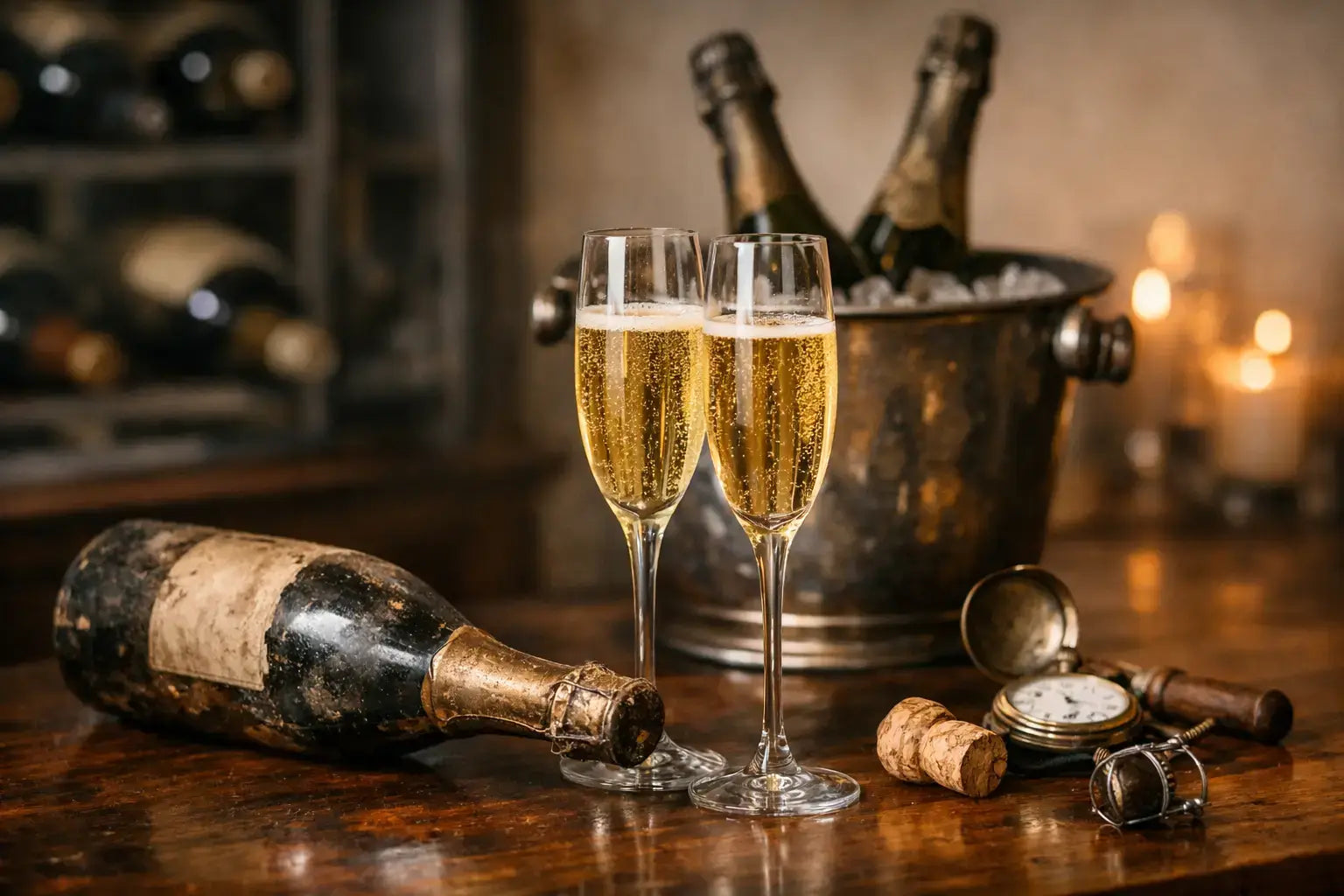
A bottle marked vintage usually costs more, carries more prestige and gets more attention on the table. That is exactly why knowing how to buy vintage champagne matters. If you are buying for a dinner, a gift or a big date in the diary, the right bottle feels considered. The wrong one can be overpriced, poorly stored or simply not suited to the moment.
Vintage Champagne is not just ordinary Champagne with an older date on it. It is made from grapes harvested in a single year, and only released when a house believes that harvest was strong enough to stand on its own. Non-vintage Champagne is built for consistency. Vintage is built around character. That difference affects flavour, ageing potential, price and the kind of producer you should choose.
The fastest mistake buyers make is assuming older always means better. In Champagne, age, producer and storage all matter together. A 2008 from a top house that has been stored properly can be a superb buy. A random older bottle from a weak merchant with unclear storage history can be a risk, even if the year sounds impressive.
Start with the producer before the vintage. Well-known houses tend to have stronger quality control, consistent cellaring standards and clearer release histories. That makes buying easier if you want confidence rather than guesswork. If you know the house style you enjoy - richer and toasty, taut and mineral, or somewhere in between - you are already making a better decision than buying by year alone.
Price also needs context. Vintage Champagne should cost more than a non-vintage bottle from the same house, but there is a point where you are paying mainly for rarity or packaging rather than what is in the glass. If the occasion is a wedding gift, landmark birthday or client thank-you, that premium may be worthwhile. If you want the best drinking experience for the money, compare several respected houses instead of chasing the most famous label.
A good vintage is one thing. A good bottle to buy today is another. Some vintages are prized because they combine ripeness, freshness and longevity. Others can be charming young but less compelling later on. That is why blanket rules rarely help.
In practical terms, look for a vintage with a reputation for balance. Champagne needs acidity to age well. It also needs enough fruit concentration to avoid becoming thin over time. Buyers often focus on prestige years, but a less hyped vintage from a producer you trust can offer better value and earlier drinking pleasure.
Disgorgement matters too, even though many casual buyers overlook it. Champagne spends time ageing on the lees before disgorgement, and that shapes texture and complexity. Two bottles from the same declared vintage may drink differently depending on when they were disgorged and how long they have been ageing since. If that information is available, it can tell you whether the wine is likely to show more fresh tension or more developed biscuit and brioche notes.
If you want to know how to buy vintage champagne confidently, spend an extra minute on the label. The vintage year should be clearly stated on the front or back. If there is no year, it is not a vintage Champagne.
Then check the producer name, cuvee name and bottle size. Magnum can be especially attractive for vintage Champagne because larger formats often age more slowly and evenly. For gifting, though, a standard 75cl bottle is usually the easier and more practical choice.
You may also see terms like Blanc de Blancs or Blanc de Noirs. Blanc de Blancs is made from white grapes, typically Chardonnay, and often shows more citrus, chalk and tension. Blanc de Noirs is made from black grapes, usually Pinot Noir and Pinot Meunier, and can feel broader, richer and more powerful. Neither is automatically better. It depends on whether you want something precise and elegant or something fuller and more vinous.
The best bottle for an anniversary is not always the best bottle for a drinks reception. Vintage Champagne carries presence, but it should still fit the setting.
For a romantic dinner or small celebration, you may want something expressive and ready to drink now. For a gift, brand recognition can matter more than cellar nuance because the recipient will notice the house name first. For a corporate gesture, classic and widely respected labels usually land better than obscure grower bottlings, however interesting they may be.
Food matters as well. A leaner vintage with bright acidity can be excellent with oysters, sashimi or a lighter starter. A rounder, more mature bottle can work beautifully with roast chicken, lobster or even truffle dishes. If the bottle is being opened without food, choose balance over intensity. You want a Champagne that impresses from the first pour, not one that needs a long meal to make sense.
Even a top vintage can disappoint if it has been stored badly. Heat, light and temperature swings are the enemy. That is why provenance matters. Buying from a reliable retailer is not just about convenience. It reduces the chance of ending up with a bottle that has spent too long in poor conditions.
Look for clean packaging, intact foil and a label in decent condition. A very worn label does not always mean a bad bottle, but it can be a warning sign if the retailer cannot explain storage. Fill level is less of a visible issue in Champagne than in old still wine, yet presentation still tells you a lot. Premium bottles should look cared for.
If you are buying in advance, store the bottle somewhere cool, dark and steady. Not next to a radiator, not in a bright kitchen and not in the boot of the car for half the day. If you are ordering for a last-minute occasion, fast delivery can actually help preserve quality by cutting out unnecessary handling and delay.
Not every celebration needs vintage. If you are hosting a larger party, a strong non-vintage Champagne may be the smarter buy because it lets you serve more guests without stretching the budget. Vintage is usually best when the bottle itself is part of the occasion.
It makes sense to buy vintage when the date matters, the gift needs status, or the drinker will appreciate the difference. A birth year bottle, where available, can be especially meaningful, though older vintages become much harder to source in good condition. In those cases, buying from a dependable premium retailer matters more than ever.
It may not make sense to buy vintage if the bottle will be mixed into cocktails, poured quickly to a noisy crowd or chosen only because the word vintage sounds expensive. There is nothing wrong with paying for prestige when prestige is the point. Just be honest about whether that is what you need.
One mistake is buying solely by famous year. Vintage reputation helps, but producer style and bottle condition can matter just as much. Another is assuming every vintage Champagne should be cellared for years. Some are released when already in a lovely drinking window.
A third mistake is ignoring dosage and style. If you prefer very dry wines, a richer, more generously dosed vintage may feel broad. If you like softer, rounder Champagne, an ultra-taut bottle from a cool year may seem severe. Know your palate before you chase ratings.
Finally, do not leave the purchase too late if the bottle is intended as a gift. Vintage stock is narrower than standard Champagne, and the best-known cuvees move quickly around Christmas, New Year, weddings and summer events. If timing matters, availability matters too.
Online buying works well for vintage Champagne if the range is clear and the retailer treats premium bottles properly. You want accurate product naming, visible vintage detail and a straightforward path from browsing to checkout. If you are sending a gift, presentation and delivery options matter nearly as much as the bottle itself.
For London buyers arranging a same-day celebration, speed does not have to mean settling for whatever is left on a shelf. A strong specialist range makes it easier to buy with purpose, whether you need an established house for tonight or a smarter gift bottle for next-day delivery elsewhere in the UK. That balance of availability and premium choice is where a retailer such as Drinks House 247 becomes genuinely useful.
The best vintage Champagne purchase is rarely the most expensive bottle on the page. It is the one that suits the occasion, comes from a producer you trust, has been stored properly and arrives when you need it. Buy with that mindset and the bottle will feel every bit as special when the cork finally goes.
Comments will be approved before showing up.