
Your Cart is Empty


- Champagne
- Gifts & Hampers
- Whisky & Spirits
- Wine
- Caviar & Gourmet
- Same-Day Delivery
- Beer
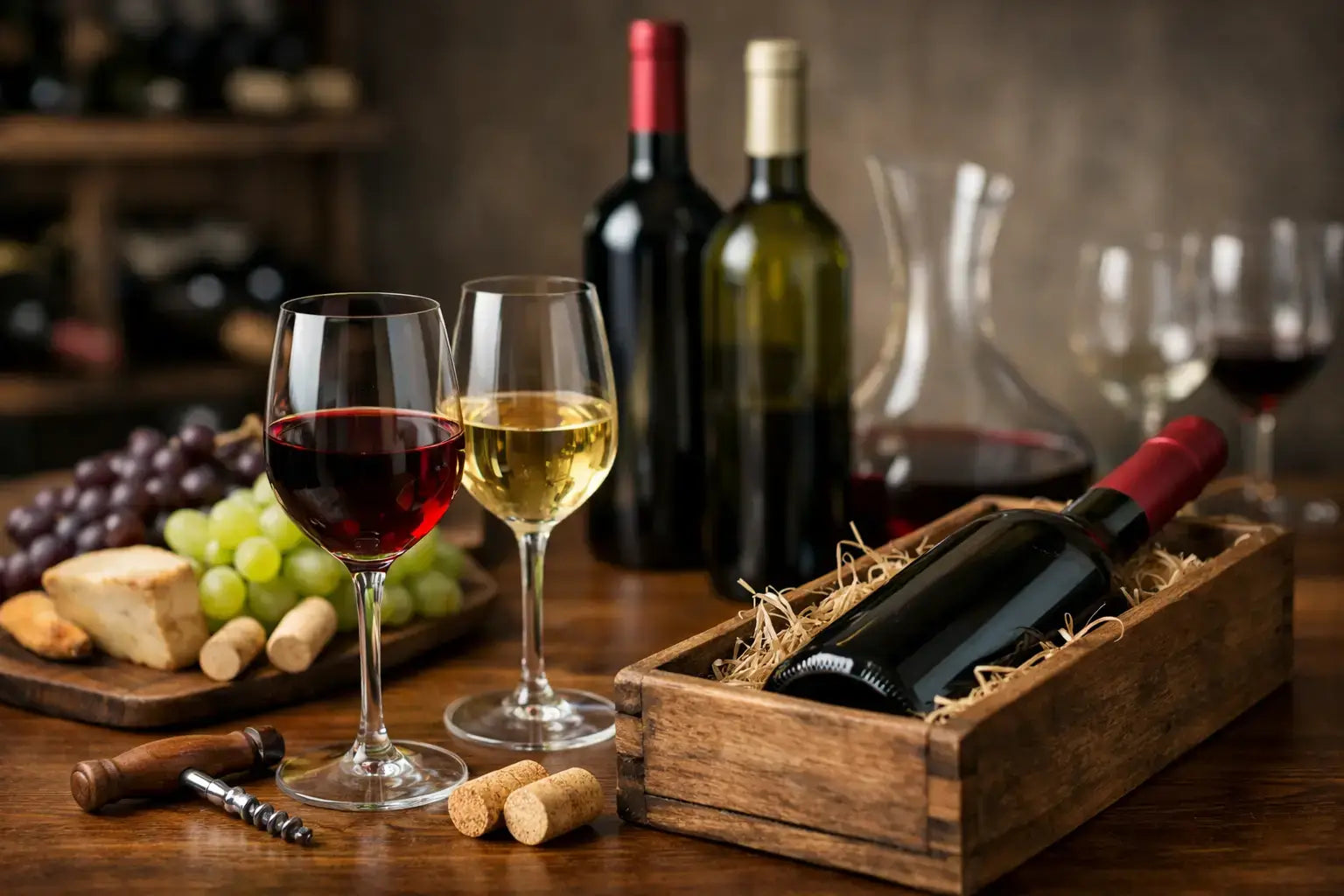
A bottle labelled Grand Cru, vintage-dated or packed in a wooden case can look convincing in seconds. Buying well takes a little more than that. This fine wine buying guide is built for shoppers who want to move quickly without making expensive guesses, whether you are choosing a dinner bottle, laying something down, or sending a gift that needs to feel right first time.
Fine wine sits in a different category from everyday drinking bottles because the stakes are higher. Price matters more, provenance matters more, and the gap between a smart purchase and an underwhelming one can be wide. The good news is that you do not need to be a collector to buy confidently. You need a clear reason for buying, a basic handle on quality signals, and enough discipline not to overpay for the wrong name.
Start with purpose, not prestige. Are you buying to drink soon, to cellar, to gift, or to mark an occasion? The right answer changes everything from region to vintage to bottle format.
If the bottle is for near-term drinking, balance and readiness matter more than theoretical ageing potential. A mature Rioja Reserva, a well-made Burgundy with a few years behind it, or a serious Barolo from a more approachable vintage may give more pleasure now than a very young trophy bottle that still needs time. If it is for storage, structure becomes more important. Acidity, tannin, concentration and producer track record all matter because they point to how the wine may develop.
For gifting, recognisable regions and estates often carry more weight than obscure brilliance. A recipient may appreciate a top producer from the Northern Rhône, but a classic Bordeaux, fine Champagne or a respected Burgundy label is usually easier to place and easier to present. Fine wine buying is not only about what is best in a critic's glass. It is also about what works for the person receiving it.
One of the biggest mistakes in any fine wine buying guide is treating expensive as automatically superior. Price can reflect scarcity, fashion, critic attention, import levels and branding as much as pure quality. That does not mean prestige wines are not worth buying. It means you should know what you are paying for.
Some regions command a premium because the top vineyard land is tiny and globally recognised. Burgundy is the obvious example. The upside is exceptional nuance at the highest level. The downside is that entry into sought-after names can be costly, and value can disappear fast if demand spikes. Bordeaux often offers a broader value ladder. You can still find classically structured wines from good producers at prices below the headline labels.
Outside France, Italy and Spain can be especially strong for buyers who want pedigree without maximum hype. Barolo, Brunello di Montalcino, top Rioja and Super Tuscans all have their place, but their value varies by producer and vintage. A lesser-known estate in a strong year can outperform a famous name in a weaker one.
Producer comes first. In fine wine, who made it usually tells you more than a glossy label. Strong producers tend to perform consistently across vintages and quality levels. Even in difficult years, disciplined vineyard work and careful winemaking can protect quality.
Vintage is the next filter, but it should be used properly. A strong vintage can mean ripeness, concentration and longevity, though style still varies by estate. A cooler or more challenging year is not always one to avoid. Sometimes it produces fresher, more classic wines that suit traditional drinkers better. If you are buying to drink now, a less monumental vintage can actually be more convenient.
Storage and provenance matter most when the wine has age. A fine bottle that has been badly stored is still a bad bottle. Look for signs that suggest proper handling: intact labels, sound capsules, sensible fill levels on older bottles and a retailer that takes condition seriously. This is especially relevant for vintage wines and large-format bottles, where replacement is not always easy.
You do not need a map of every appellation in Europe, but a few anchor regions help you buy faster. Bordeaux remains a cornerstone for collectors and gift buyers because it offers recognisable names, left bank Cabernet structure, right bank Merlot richness and a wide range of price points. Burgundy is more delicate, site-driven and often more expensive, with Pinot Noir and Chardonnay at its core.
Champagne belongs in the fine wine conversation too. Prestige cuvées, vintage expressions and grower producers can all make strong purchases depending on your budget and occasion. For celebration gifting, Champagne often wins on impact before the cork is even out.
Italy gives you stylistic range. Barolo offers tannic structure and ageing potential. Brunello brings depth and polish. Amarone adds power and richness. Spain, especially Rioja and Ribera del Duero, can offer mature, complex wines that are ready to drink earlier than buyers expect. If you want precision and freshness, top German Riesling and serious Loire whites deserve attention. If you want collectible New World names, look to benchmark producers from Napa, Australia and Chile, but buy selectively because prices can climb quickly.
The best buying decision often comes down to timing. If a bottle is needed for a dinner this week, buying a tightly wound young first growth style wine may be more about symbolism than pleasure. In that case, choose something with a track record of approachability or some bottle age already in place.
If you are building a small cellar, buy with patience and variety. Not every bottle needs twenty years ahead of it. A smart mixed approach works better: some wines for near-term enjoyment, some with five to eight years of development, and a few with long horizons. That way, your collection remains useful rather than decorative.
For gifts, think about presentation and confidence. Magnum formats, vintage Champagne, classic Bordeaux and elegant Burgundy all carry occasion value. The trade-off is practicality. A magnum looks impressive but may be less convenient for a quiet household. A famous label impresses instantly but may cost more than an equally fine bottle from a less publicised estate.
Chasing scores without checking style is one of the most common errors. A highly rated wine may be superb yet still wrong for your palate or your event. Rich, powerful wines can dominate food. Delicate, mineral styles may disappoint someone expecting obvious weight.
Buying too young is another issue. Fine wines often need air, time or both. If you want something to open tonight, choose a bottle with maturity or a producer known for accessibility. Buying without checking bottle size can also catch people out. A standard 75cl bottle and a magnum create very different experiences, especially for parties and gifts.
Finally, do not ignore occasion pressure. Last-minute buyers often default to the most recognisable bottle in stock. Sometimes that is the right move. Sometimes a better result comes from choosing by style, region and readiness rather than by fame alone. A fast decision is still better when it is an informed one.
Online buying rewards clarity. Filter by region, grape, style, producer or bottle size, then narrow by purpose. If you are buying for a dinner, prioritise drinkability now. If you are gifting, prioritise recognition and presentation. If you are collecting, prioritise provenance, vintage and producer strength.
This is where a well-structured selection matters. A retailer with strong coverage across vintage wines, prestige Champagne, biodynamic bottles, large formats and classic regions gives you room to buy by intent rather than settle for what happens to be left. For shoppers who need a premium bottle quickly, that matters as much as the wine itself. Drinks House 247 is built around that mix of speed, breadth and occasion-led buying.
The smartest fine wine purchase is rarely the flashiest one. It is the bottle that suits the moment, arrives in proper condition, and delivers what you expected when the cork comes out. Buy with purpose, trust strong producers, and let the label impress only after the fundamentals are in place.
Comments will be approved before showing up.