现已开放 | 伦敦当日送达及英国次日送达(礼品选项)
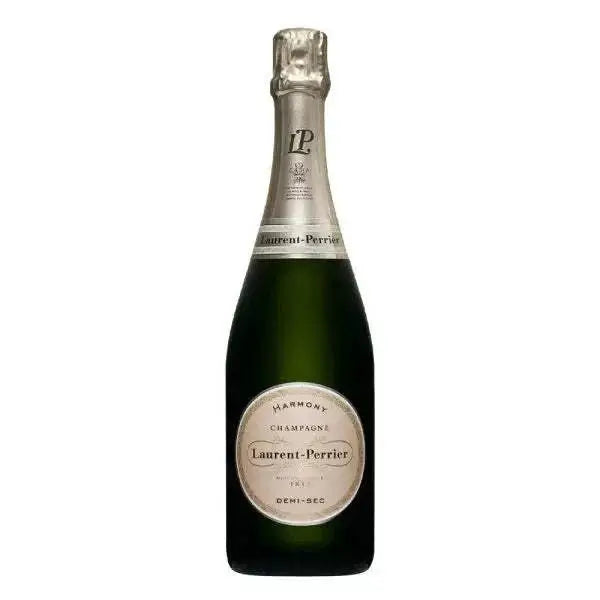
Demi-sec champagne is a sweet style containing 32 to 50 grams of sugar per litre, against a maximum of 12 for brut. Despite a name that translates as half-dry, it tastes clearly sweet, and it is at its best served chilled with fruit desserts, pastries, blue cheese or spiced food.
Almost every champagne has a little sugar added just before the final cork goes in. This step is called dosage: a small measure of wine and sugar tops up the bottle after the yeast sediment has been removed. The amount of sugar in the finished wine decides which sweetness term appears on the label.
Those terms are not marketing language. They are set out in European wine law, carried over into UK rules, and they apply to every sparkling wine, so the same words mean the same thing on champagne, cava, crémant and English sparkling wine. Demi-sec is the second sweetest of the seven categories.
The table shows the legal sugar range for each label term, with the amount of sugar that works out to in a standard 125ml glass.
| Label term | Sugar per litre | Sugar per 125ml glass | How it tastes |
|---|---|---|---|
| Brut nature (zero dosage) | Under 3g, none added | Under 0.4g | Bone dry |
| Extra brut | 0 to 6g | Up to 0.75g | Very dry |
| Brut | Under 12g | Under 1.5g | Dry |
| Extra dry | 12 to 17g | 1.5g to 2.1g | Off-dry |
| Sec | 17 to 32g | 2.1g to 4g | Medium |
| Demi-sec | 32 to 50g | 4g to 6.25g | Sweet |
| Doux | Over 50g | Over 6.25g | Very sweet |
Two of these names catch people out. Extra dry is sweeter than brut, not drier, which is why many proseccos labelled extra dry taste softer than a brut champagne. Sec means dry in French, yet a sec sparkling wine is medium at best. If you want a properly dry glass, look for brut, extra brut or brut nature. Our guide to the difference between brut and extra brut covers the dry end of the scale in more detail.
The names made sense when they were coined. For much of the nineteenth century champagne was a far sweeter drink than it is now, often served with dessert, and a wine with 40 grams of sugar per litre really did sit on the drier side of what was being sold. Tastes shifted towards dry styles in the later 1800s, with British drinkers among the keenest, and brut gradually became the standard. The old terms stayed on the label while the wines around them changed, which is how a sweet wine came to carry a name that sounds dry.
The useful rule is that the wine should be at least as sweet as the food. A dry champagne served with cake tastes thin and sharp, because the sugar in the cake strips the fruit from the wine. Demi-sec has enough sweetness to hold its own, and the acidity and bubbles keep it from feeling heavy.
It is not the answer to everything on the Christmas table. A dense, dark Christmas pudding is usually sweeter and richer than a demi-sec, and a proper dessert wine or a sweet fortified wine copes with it better.
For most occasions, no. Brut is the safer all-round bottle: it suits an aperitif, canapés, seafood and a toast on its own, and there is far more of it to choose from because it makes up the large majority of champagne produced. If you are buying one bottle and are not sure what will be served with it, buy brut.
Demi-sec earns its place in three situations: when the toast happens alongside cake, when the bottle is going on the table with pudding, and when the person drinking it simply finds brut too sharp. That last point matters for presents. If someone usually reaches for sweeter wines, a demi-sec is a more thoughtful pick from the champagne gifts range than a very dry prestige bottle they will not enjoy.
It is also worth saying that champagne is not the only route to a sweet sparkling wine. Moscato d'Asti from northern Italy is sweet, gently fizzy and only around 5.5% ABV, compared with about 12% for champagne. It usually costs less and is often a better match for light fruit desserts. Choose demi-sec champagne when you want the depth and finer bubbles that come from bottle fermentation and longer ageing.
Serve it at 8 to 10°C, the same as other champagne. Sweetness tastes heavier as a wine warms up, so it pays to keep the bottle cold between pours. Around three hours in the fridge will do it, or 20 to 30 minutes in a bucket filled with ice and water. A tulip glass or a small white wine glass shows the aromas better than a narrow flute, and a 75cl bottle gives six 125ml glasses.
Several of the large houses make one alongside their brut. Laurent-Perrier Harmony, Moët & Chandon Nectar Impérial and Piper-Heidsieck Cuvée Sublime are among the best known, and English producers have joined in too, Nyetimber's Cuvée Chérie being one example. The word demi-sec is always printed on the front label or the neck, so the style is easy to spot once you know to look for it.
Drinks House 247 offers champagne delivery in London 24 hours a day, typically within 30–45 minutes across Greater London, and next day to mainland UK when ordered by 4pm. There is no minimum order, and a personalised gift note is free if the bottle is a present.
It is sweet. Demi-sec champagne contains 32 to 50 grams of sugar per litre, compared with under 12 grams for brut.
Yes. Extra dry contains 12 to 17 grams of sugar per litre and brut contains under 12 grams, so extra dry tastes slightly sweeter.
No. Doux is the sweetest category, with more than 50 grams of sugar per litre, and it is rarely made today. Demi-sec sits one step below it.
Serve it at 8 to 10°C. Around three hours in the fridge or 20 to 30 minutes in a bucket of ice and water will bring a bottle to the right temperature.
18+ only. Challenge 25 applies. Please drink responsibly.
张贴前管理员会先审核您的留言

Tawny port, off-dry Riesling or a soft, mature red will suit most cheese boards. Here is which wine matches which cheese, and why white often works better than red.


