现已开放 | 伦敦当日送达及英国次日送达(礼品选项)
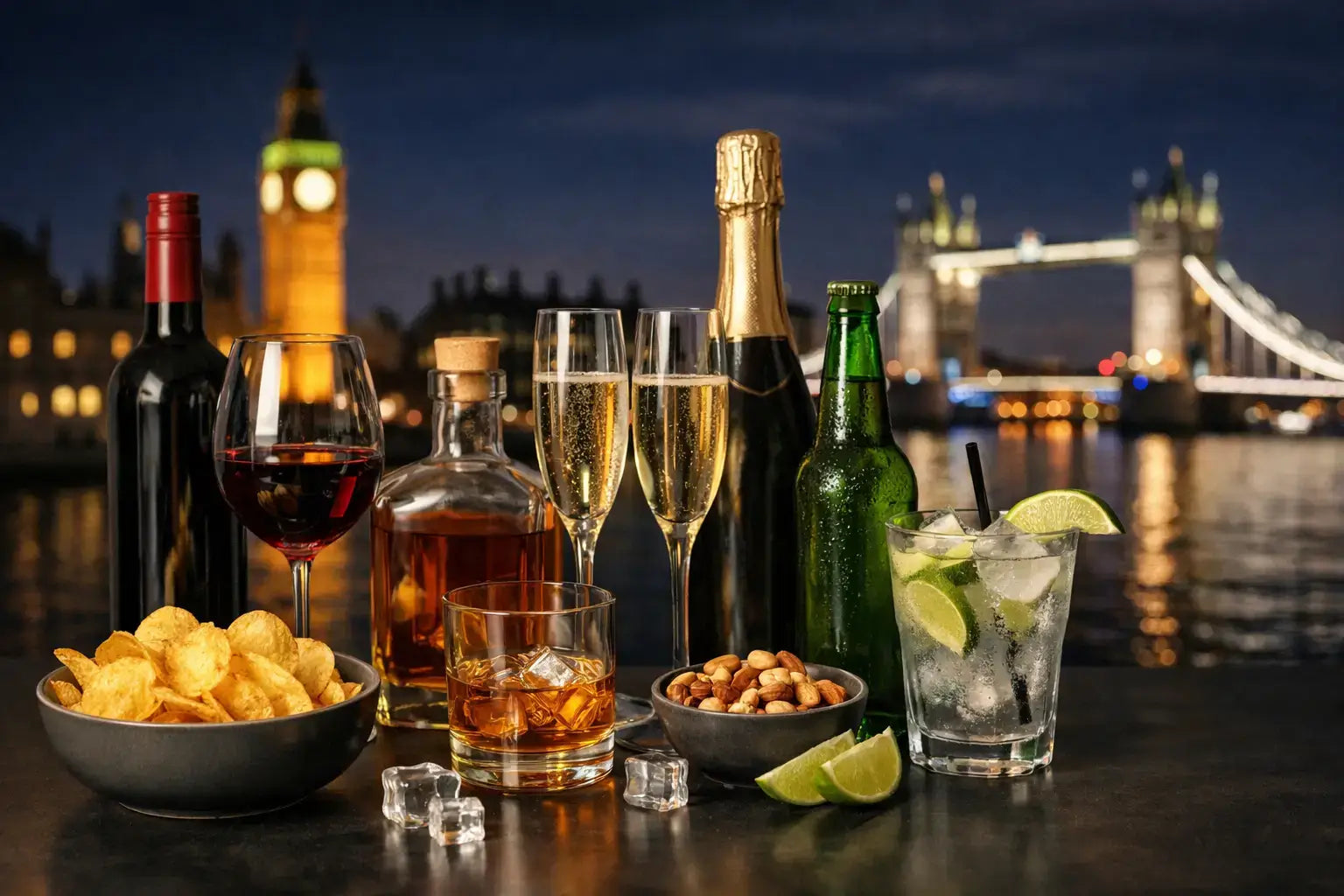
Half the city is winding down. The other half has just realised the wine rack is empty, the Champagne is warm, or the host counted badly. That is exactly when midnight alcohol delivery London stops being a nice extra and starts looking essential.
Late-night ordering is rarely about browsing for the sake of it. It is usually tied to a moment that needs solving fast - friends staying longer than expected, a birthday that has rolled past dinner into drinks, an after-party that needs one more bottle, or a gift you should have sorted earlier. The real question is not whether you can get alcohol delivered at midnight. It is what makes sense to order when speed matters, tastes differ, and nobody wants to gamble on the wrong bottle.
London runs late. Dinners stretch, work events spill into the evening, and plans change with very little warning. In that kind of city, late-night drinks delivery is not just convenience-led. It is part of how people host properly without leaving guests waiting or heading out to search for an off licence that may already be closed.
There is also a quality question. If you only need any bottle, options are easy. If you want a specific Champagne house, a decent whisky, a crowd-pleasing rosé, or a gift set that still feels polished after hours, the service matters more. Fast delivery only works if the range is strong enough to match the occasion.
That is where a premium-led retailer has an advantage. Urgency gets the order placed. Selection is what makes the order worth placing.
The fastest way to order well at midnight is to match the bottle to the moment rather than overthink the category.
If people are already in the room, go broad and easy. Prosecco, non-vintage Champagne, crisp Sauvignon Blanc, Provençal-style rosé, premium lager and a reliable vodka all make sense because they cover different tastes without slowing the decision. This is not the moment for an experimental orange wine or a smoky mezcal unless you know your crowd well.
Sparkling tends to do more work than still wine at this hour. It feels celebratory straight away, pours easily, and keeps the mood up even if the original plan was only one drink. If the budget allows, Champagne is the cleanest upgrade. If the aim is volume and speed, Prosecco often wins.
Midnight is a strong time for impact buys. Magnum bottles, prestige Champagne, luxury gift sets, and bottles presented with chocolates or flowers all have more presence than standard orders. If someone is marking a birthday, engagement, promotion, or arrival back into town, the bottle should look intentional, not improvised.
That does not always mean buying the most expensive label. It means buying something recognisable and occasion-ready. A respected Champagne house, a well-known rosé from Provence, or an aged spirit with proper shelf appeal will land better than three random bottles added in a rush.
Not every midnight order is for a party. Sometimes it is one bottle of red for a late dinner, a neat whisky for the end of the night, or a fine wine that fits the food better than whatever is already at home. In those cases, quality matters more than quantity.
A Pinot Noir, Rioja Reserva, Chablis, Sancerre or a polished single malt can feel far more considered than loading the basket with extras you do not need. If the order is personal rather than social, buy the bottle you actually want.
Some drinks are simply better suited to midnight ordering because they are flexible, recognisable and low-risk.
Champagne is the obvious late-night performer. It covers celebrations, gifts, apologies, and party upgrades in one move. Non-vintage bottles are usually the practical sweet spot - premium enough to impress, accessible enough for mixed groups, and ready for almost any occasion.
Vodka is another strong choice because it keeps options open. If mixers are needed, they can be added quickly. It suits casual gatherings where not everyone wants wine or bubbles, and it works for hosts who need a versatile bottle rather than a statement piece.
Rosé remains useful because it bridges the gap between casual and premium. It is easy to serve, easy to recognise, and often the first bottle to disappear at informal gatherings. The trade-off is seasonality. In colder months, red wine and whisky may suit the room better.
For beer drinkers, the smart move is to avoid overcomplicating things. Late at night, familiar premium beers and ciders usually outperform niche craft choices unless the group specifically wants them. Convenience matters, but so does drinking something people will actually finish.
There is a difference between ordering fast and ordering cheaply. Midnight buying often sits in that gap.
If the bottle is carrying the occasion, premium is usually worth the extra spend. Champagne for an anniversary, vintage wine for a serious dinner, or a luxury spirit for an important guest all justify a higher basket value because the bottle is doing more than filling a fridge. It is setting the tone.
If the order is functional - topping up beer, adding mixers, replacing the white wine that ran out - then mid-range is often the better call. The smart late-night order is not always the most expensive one. It is the one that fits the moment with the least friction.
That balance is why range matters. A good service should let you move from everyday beer and cider to fine wine, large-format bottles and prestige cuvées without sending you elsewhere.
People often talk about delivery speed as if that is the only metric. It is not. A service can promise quick fulfilment, but if the bottle you want is out of stock, substituted, or limited to a shallow range, the speed becomes less useful.
The better test is simple. Can you order what you actually need, at the time you need it, without compromising too much on quality? For London customers ordering late, that usually means looking for a retailer that is open now, clear on fulfilment, and strong across Champagne, wine, spirits, beer, soft drinks and gifting add-ons.
That last part matters more than people think. Midnight orders are often mixed baskets. Someone needs a bottle of Blanc de Blancs, someone else wants tequila, and the host has forgotten tonic, ice alternatives, chocolate or a presentable gift option. A narrow catalogue slows everything down.
Late-night shopping rewards decisiveness. Start with the occasion, then choose a lead category. If it is a celebration, begin with Champagne or sparkling. If it is a group gathering, add one spirit and one crowd-pleasing wine. If it is a gift, focus on presentation first and category second.
It also helps to think in terms of coverage. One premium sparkling bottle plus one still wine and one spirit will usually do more for a mixed group than three similar wines. If the gathering is bigger, add beer or cider for breadth rather than stacking the basket with more of the same.
For gifting, presentation can rescue timing. A bottle that arrives with chocolates, flowers or in a curated set feels planned even when it was ordered at the last possible hour. That is part of the reason Drinks House 247 appeals to both urgent buyers and premium gift shoppers - the order can solve a practical problem without looking purely practical.
Midnight delivery is useful, but it still works best when the order is realistic. Some products will naturally be more available than others, and very niche bottles may require compromise if the priority is immediate fulfilment. That is normal. The advantage of a broad catalogue is that compromise does not have to mean settling for poor quality.
It is also worth remembering that late-night ordering is not only about alcohol. Soft drinks, chocolates, flowers and gift-ready extras can turn a basic basket into something that feels complete. If the occasion matters, finishing touches matter too.
The best midnight order is the one that arrives quickly, suits the room, and does not feel like a panic buy once the doorbell goes. In London, that usually means choosing with purpose, buying for the occasion, and letting speed support quality rather than replace it.
张贴前管理员会先审核您的留言


