现已开放 | 伦敦当日送达及英国次日送达(礼品选项)
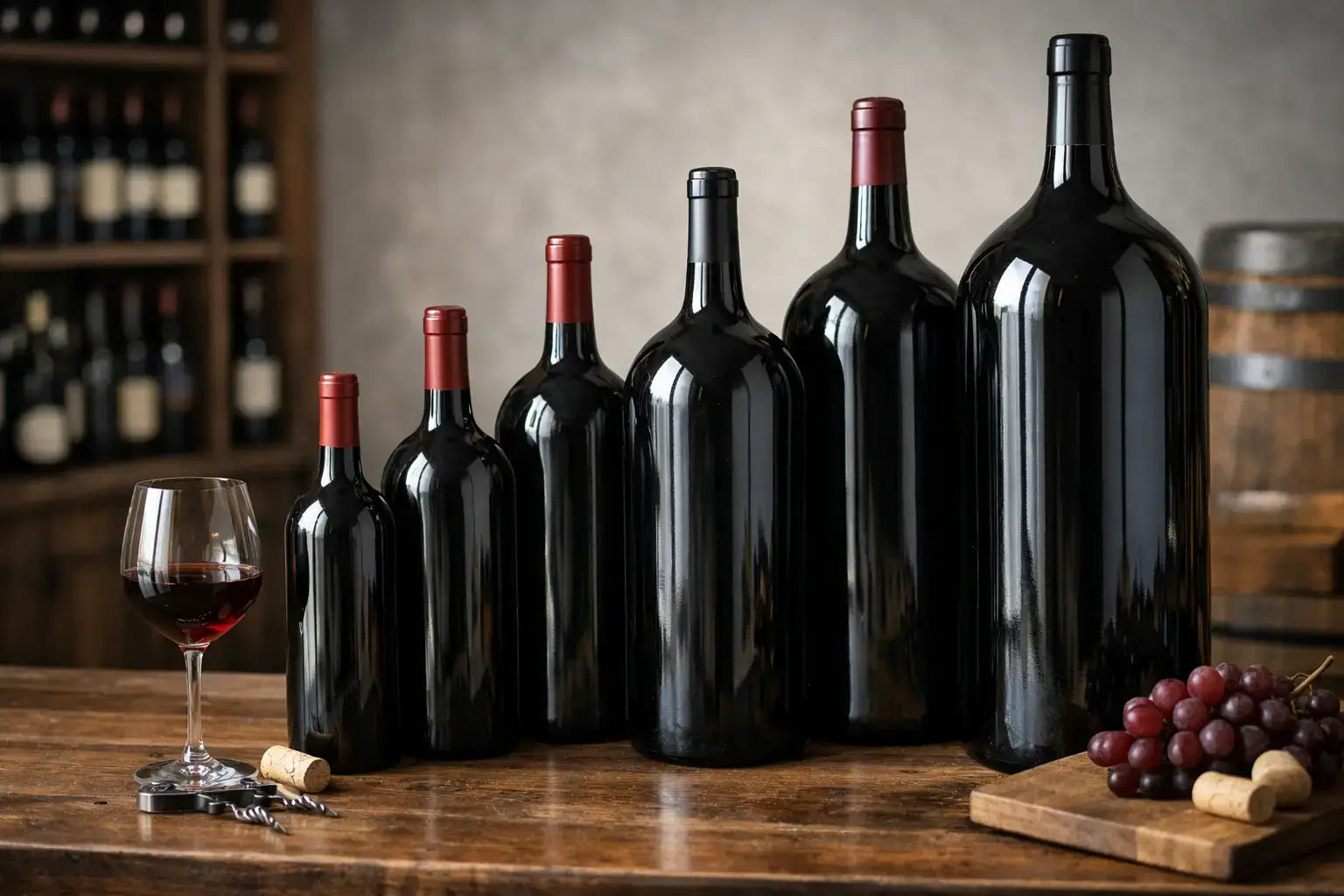
A standard 75cl bottle gets the job done. Large format wine bottles change the mood of the room.
If you are hosting a proper dinner, sending a statement gift or planning a wedding table that needs to look as good as it pours, bottle size matters. Larger bottles bring theatre, but they also affect serving numbers, ageing potential and value. That makes them more than a novelty purchase. For the right occasion, they are the smarter buy.
In simple terms, large format wine bottles are any bottles bigger than the standard 75cl size. The most common step up is the Magnum at 1.5 litres, which holds the equivalent of two standard bottles. After that, sizes become more dramatic, less common and usually more occasion-led.
You will see a few names come up regularly. A Magnum is 1.5 litres, a Jeroboam is often 3 litres for still wine, a Rehoboam can be 4.5 litres, and a Methuselah reaches 6 litres. Naming can vary slightly between still wine and Champagne, which catches some buyers out. If you are buying for a specific event, it is worth checking the actual litre size rather than relying on the name alone.
For most customers, the practical sweet spot is the Magnum. It is noticeably more impressive than a standard bottle, easier to chill and pour than the really oversized formats, and more widely available across red wine, white wine, rosé and Champagne.
The first reason is obvious. They look impressive.
A large bottle lands differently at a birthday dinner, engagement party or corporate event. It signals celebration before the cork is even pulled. If you are sending a gift, it also feels considered and premium in a way that two separate standard bottles often do not.
The second reason is service. One larger bottle can be easier to present on the table than a cluster of smaller ones, especially when you want the evening to feel polished rather than pieced together. For hosts, that means fewer bottles to open, fewer labels cluttering the table and a stronger centrepiece effect.
The third reason is quality over time. Wine in larger bottles can age more slowly and steadily because the ratio of oxygen to wine is lower than in a standard bottle. That does not mean every large bottle automatically tastes better, but for fine wine and vintage Champagne, format can matter.
Often, yes.
For age-worthy wines, larger formats are prized because they tend to develop at a gentler pace. That can preserve freshness and structure for longer. Collectors and buyers choosing a bottle for a milestone birthday or anniversary often like this point because it adds more than visual appeal.
There is a trade-off, though. Large formats usually cost more than the exact volume equivalent in standard bottles. Some of that is down to packaging, lower production volumes and handling. So if your goal is simply cheapest price per glass for a casual get-together, a larger bottle is not always the value winner.
Still, if the occasion matters, many buyers decide the premium is justified. You are not paying only for liquid. You are paying for presentation, convenience and often a more memorable experience.
Some purchases are about utility. This one is usually about utility plus impact.
Weddings are an easy fit, particularly for Magnum Champagne and larger rosé or white wine bottles that can be shared at the table. A birthday party works well too, especially if you want one bottle to mark the toast rather than opening several smaller ones. Anniversaries, housewarmings and corporate gifting are also strong matches.
They are equally useful for hosts who have left it later than planned. If guests are on the way and you want a bottle that looks intentional rather than last-minute, a Magnum is a fast fix. It reads as celebratory, even when the order was placed at speed.
For gifting, large bottles make sense when the recipient already enjoys wine and recognises the difference. If they are more casual drinkers, the visual impact still lands, but you may be better off choosing a reliable house, a popular region or a bottle paired with chocolates or gift packaging instead of chasing the rarest format available.
The right size depends on three things: guest count, serving style and how much theatre you actually want.
A Magnum usually serves around 10 to 12 modest glasses, depending on the pour. That makes it ideal for a dinner party, romantic celebration with a little left over, or a gift that feels generous without becoming awkward to store or transport. A 3-litre bottle can suit larger gatherings, but by that point you need to think more carefully about chilling space, glassware, table space and pouring.
If the bottle will be opened and passed around casually, bigger is not always better. Very large formats can be heavy, harder to handle and slower to chill through. They are excellent for venue service or a well-planned event, less ideal for a cramped kitchen and six people standing around waiting for a top-up.
Wine style matters too. Champagne and sparkling wine naturally suit larger bottles because the format adds ceremony. Red wine works brilliantly for formal dinners and gifting. White wine and rosé are strongest in warmer-weather entertaining, but they need proper chilling, and that becomes more demanding as bottle size increases.
A good gift needs to do two things quickly. It should look impressive on arrival and make sense for the person receiving it.
That is where large format wine bottles perform well. They have presence before they are opened, which makes them ideal for birthdays, thank-yous, promotions and family celebrations. They also feel more premium than a standard bottle without forcing you into the very highest luxury price bracket.
There is still some judgement involved. If you know the recipient prefers Bordeaux, Barolo or vintage Champagne, buy to taste. If you do not, lean towards widely recognised styles and trusted producers. A Magnum of Champagne is usually a safer gift than a giant bottle of niche red that needs years in the cellar to show well.
Presentation helps. A large bottle in a gift-ready format feels deliberate and polished, particularly for next-day delivery orders where the buyer wants the recipient to feel looked after from the moment the package arrives.
Bottle size is the headline, but logistics matter.
Start with storage. A Magnum fits in many wine fridges and some standard fridges, though not always comfortably. Once you move beyond that, space gets tight quickly. If the bottle needs to be served cold, make sure you have the room and time to chill it properly.
Then think about pouring. Large bottles are heavier than people expect. A Magnum is manageable for most hosts. A 3-litre bottle can already feel cumbersome, especially if you are pouring at the table. If service will be informal, a slightly smaller large format may be the better choice.
You should also check whether the producer and vintage justify the format premium. Not every wine becomes more desirable because it is bigger. Some are bought for spectacle, others for cellaring, and the best purchases usually do both.
If availability matters, buy from a retailer with a clear range and reliable fulfilment. When an event is close, speed counts just as much as selection. Drinks House 247 is built for exactly that mix of urgency and premium choice, whether you need a standout bottle in London fast or a gift sent next day across the UK.
Usually, yes - if you are buying for an occasion rather than just a unit price.
For dinner parties, gifting and milestone moments, larger bottles bring more than extra volume. They create a focal point, sharpen the sense of celebration and often offer a better ageing format for fine wine. The caveat is that they demand a bit more thought around budget, chilling and handling.
That is really the whole decision. If you want pure practicality, standard bottles remain the easy answer. If you want the bottle to do part of the talking, large format wine bottles earn their place very quickly.
When the moment calls for something with presence, choose the size that fits the table, not just the drinks bill.
张贴前管理员会先审核您的留言


