现已开放 | 伦敦当日送达及英国次日送达(礼品选项)
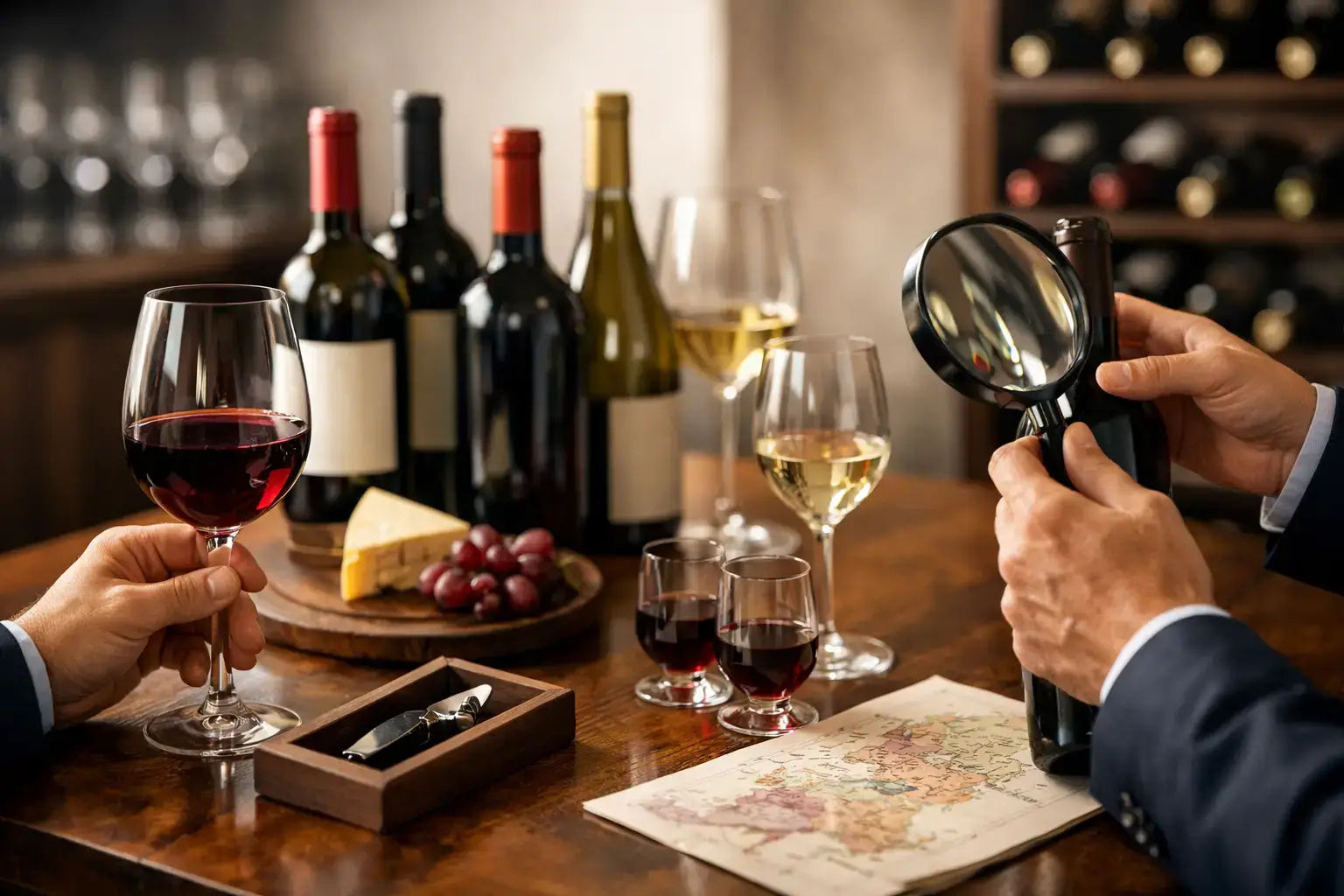
You do not need to know every château in Bordeaux or every cru in Burgundy to buy well. If you have ever stood in front of a premium wine range wondering what actually makes one bottle worth £30 and another £300, this guide on how to choose fine wine is built for that moment - fast, practical, and clear enough to use when you are buying for tonight, for a gift, or for a proper celebration.
Fine wine is not just expensive wine. Price matters, but it is not the whole story. A fine wine usually comes from a respected region, a strong producer, a good vintage, or a combination of all three. It tends to offer more balance, complexity, ageing potential and a clearer sense of place than an everyday bottle.
That does not mean every fine wine must be old, rare or difficult to drink. Some are generous and ready to enjoy now. Others are built for cellaring. The key is knowing what you are buying it for, because the right bottle for a dinner party is not always the right bottle for an anniversary gift or a long-term investment purchase.
Start with the occasion before you start with the label. This saves time and usually leads to a better bottle.
If you are buying for drinking now, look for wines with approachability as well as pedigree. A well-made Barolo may be famous, but some examples need years to soften. A high-quality Rioja Reserva or mature Bordeaux can be easier to enjoy straight away. If the bottle is for a gift, recognisable regions and classic names often land better than something obscure, unless the recipient already knows exactly what they like.
For business gifting, you are usually safer with established regions such as Champagne, Bordeaux, Chablis or Napa Valley. They signal quality quickly. For a dinner party, matching the wine to the food and the crowd matters more than choosing the most prestigious label in the room.
Most fine wine decisions become easier once you narrow the style. Think in terms of what the wine tastes like and how it will be used.
Fine white wine can range from crisp and mineral to rich and oak-aged. Chablis and top Sancerre are ideal when you want freshness, precision and food-friendliness. White Burgundy often brings more texture and depth. Riesling can be one of the smartest buys in fine wine, but it depends whether you want dry, off-dry or sweet.
Fine red wine covers an even wider spread. Pinot Noir tends to be lighter in body, fragrant and layered. Cabernet Sauvignon and Bordeaux blends are firmer, more structured and often more age-worthy. Syrah can be savoury and peppery, while Nebbiolo offers perfume, tannin and seriousness. If you know the drinker prefers soft, plush reds, a young classified Bordeaux may not be the best fit just because it carries prestige.
Sparkling wine needs the same thinking. Vintage Champagne, grower Champagne and prestige cuvée all have their place, but not every celebration calls for the most expensive bottle. Sometimes a very good non-vintage Champagne from a respected house is the better buy, especially when you want consistency and immediate drinking pleasure.
A famous region helps, but it should not do all the work. Great producers in less fashionable appellations can outperform average producers in big-name regions.
When deciding how to choose fine wine, look at the producer as a quality signal. Houses and estates with a strong track record are more reliable across vintages. In regions with huge variation, such as Burgundy, producer reputation can be the difference between a remarkable bottle and an overpriced one.
This is especially useful if you are buying online and need to make a quick, confident decision. If the producer is known for consistency, the risk drops. If you are choosing between two similar wines at different prices, the stronger producer often justifies the premium more than the grander-sounding appellation.
Vintage matters most in regions where weather conditions strongly affect quality. Bordeaux, Burgundy, Champagne and Barolo can all show significant vintage variation. That said, a great producer in a difficult vintage can still make a better wine than a weak producer in a celebrated year.
If the wine is for immediate drinking, do not chase vintage headlines alone. A blockbuster year can produce wines that are powerful but still tight and youthful. A slightly softer vintage may actually drink better now. If the bottle is intended for ageing or collecting, then vintage becomes more important because structure, concentration and longevity move up the priority list.
There is a point in fine wine where you stop paying only for quality and start paying for rarity, status and demand. Sometimes that is worth it. Sometimes it is not.
At entry fine wine level, spending a bit more often does buy a clear step up in depth and craftsmanship. Move further up, and the gains become narrower. A £60 bottle may dramatically outperform a £20 one. The jump from £150 to £300 can be much smaller unless you care about collectability, scarcity or prestige branding.
That is not a reason to avoid expensive wine. It is a reason to buy with purpose. If the goal is to impress a knowledgeable recipient, provenance and label recognition may matter. If the goal is a brilliant bottle for supper, value can come from lesser-known estates, mature vintages from overlooked years, or strong regions sitting just outside the spotlight.
One of the biggest mistakes in fine wine is assuming older always means better. Some wines improve with age. Others lose their freshness and charm if left too long. Many fine wines sold today are ready to drink, but some still need time.
Check whether the wine is built for early enjoyment or development. Mature wines can be superb for gifting or special dinners because they offer complexity without the wait. Younger wines may be more vibrant but less settled. If you need the bottle for this weekend, it is worth choosing a wine with a drinking window that starts now rather than in five years.
A gift bottle has to do two jobs at once. It should feel premium on arrival, and it should be enjoyable when opened.
Recognition helps. Champagne, classified Bordeaux, Barolo and grand cru Burgundy all carry weight, but they suit different recipients and budgets. Presentation matters too. Gift sets, large-format bottles and vintage-dated wines can make more impact than chasing the highest critic score.
If you are sending wine as a last-minute present, convenience should not force a compromise on quality. A retailer with a strong premium range makes that easier, particularly when you need rapid delivery in London or next-day gifting across the UK. Drinks House 247, for example, is built around that mix of speed and high-end selection.
The first is buying on region name alone. Prestige can mask an average producer or an awkward vintage. The second is ignoring the drinker. A serious bottle that does not suit their taste is still the wrong bottle.
The third is treating critic scores as the final answer. Scores can be useful, but they do not tell you whether the wine is elegant or bold, mature or youthful, generous or austere. The fourth is overbuying tannic or age-worthy wines for immediate drinking. Fine wine should suit the moment, not just the label.
If you want a practical shortcut, make your choice in this order: occasion, style, region, producer, vintage, then price. That sequence keeps the decision grounded in what you actually need.
For example, if you need a polished red for a client dinner tonight, you might land on a mature Bordeaux from a reliable château rather than a young Barolo with bigger reputation but less immediate appeal. If you need a luxury gift, a vintage Champagne or a large-format bottle may be the smarter move because the impact is obvious the moment it arrives.
Confidence does not come from memorising every grape and vintage chart. It comes from recognising a few dependable signals and using them quickly. Think about the drinker, the occasion, whether the bottle is for now or later, and whether the producer has earned the price.
Fine wine should feel exciting, not like an exam. The smartest bottle is usually the one that fits the moment perfectly, arrives when you need it, and tastes every bit as good as it looks when the cork comes out.
张贴前管理员会先审核您的留言


