现已开放 | 伦敦当日送达及英国次日送达(礼品选项)
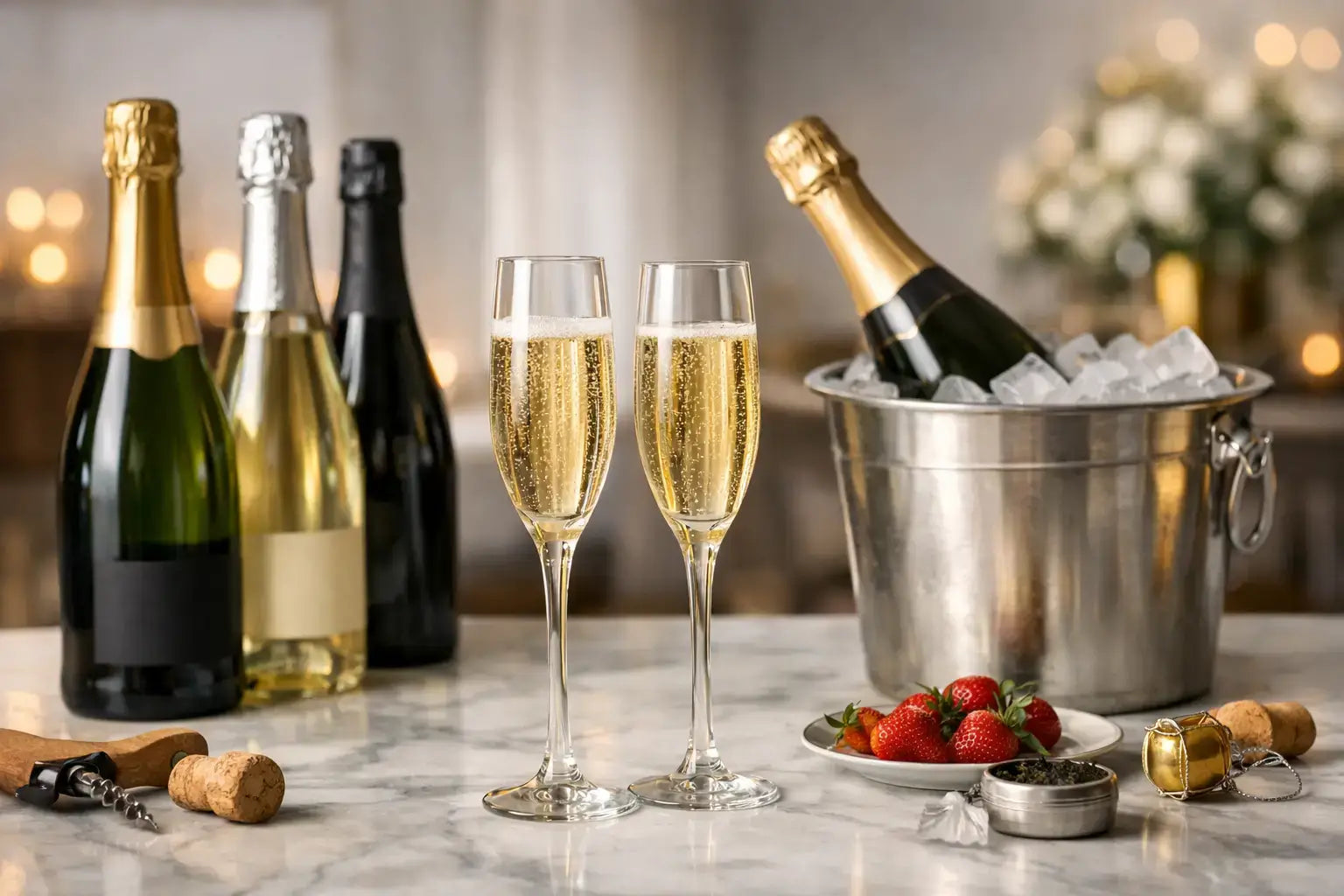
You do not need to know every grand marque in Reims to buy well. Most people asking how to choose champagne want the same thing - a bottle that feels right for the moment, suits the budget, and lands confidently whether it is being poured at dinner, sent as a gift, or opened five minutes before guests arrive.
That is where a little clarity matters. Champagne can look crowded with terms, houses, bottle styles and price points, but the buying decision is usually simpler than it first appears. Start with the occasion, then narrow by taste, then by budget. Once you do that, the label becomes far less intimidating.
The quickest way to buy the right bottle is to think about where it is going and what role it needs to play. A bottle for a wedding toast is not always the same bottle you would choose for seafood at dinner, and neither is necessarily the best option for a corporate gift.
If you are buying for a party, reliability matters more than novelty. A non-vintage Brut from a recognised house is often the safest choice because it is designed for consistency. It will usually be fresh, balanced and easy to enjoy across a mixed group of guests. This is the bottle you buy when you want something polished, crowd-pleasing and low risk.
If you are buying for a gift, presentation and brand recognition can matter almost as much as what is in the bottle. Some recipients love discovery, but many want the reassurance of a respected Champagne house. A smart box, a well-known label and a style that is easy to enjoy usually work better than an overly niche bottle unless you know the recipient’s taste well.
For dinner, pair the style to the food rather than just picking the most famous name. Blanc de Blancs tends to work beautifully with oysters, sushi and lighter dishes because it is often more citrus-led and precise. Richer styles, including some vintage Champagnes or Blanc de Noirs, can stand up better to roast poultry, creamy sauces or truffle-based dishes.
For big milestones, price becomes part of the experience. That does not mean the most expensive bottle is always the best one, but prestige cuvées and vintage Champagnes carry weight because they signal occasion. If the bottle is meant to arrive with impact, that category earns its place.
If you want to know how to choose champagne with confidence, learn the few style terms that actually affect taste. Most shoppers do not need a full wine education. They just need to know what will taste crisp, what will feel richer, and what will come across as dry.
Brut is the standard starting point. It is dry, but not aggressively so, and suits most palates. If you are buying without much information, Brut is usually the safest call.
Extra Brut is drier still. It can be brilliant if the drinker enjoys sharper, more mineral styles, but it is less forgiving for casual drinkers who prefer softer fruit.
Demi-Sec is sweeter and often overlooked. It can work very well with dessert or for anyone who finds standard Brut a little too austere. It is not the default party bottle, but it has a clear place.
Then there is the question of grapes. Blanc de Blancs is made from Chardonnay and often shows finesse, freshness and a lighter touch. Blanc de Noirs is made from darker grapes, typically Pinot Noir and Pinot Meunier, and can feel broader, rounder and more powerful. Neither is better. It depends on whether you want elegance or depth.
Rosé Champagne brings another decision. Some buyers choose it for colour and gifting appeal, which is fair enough, but it also has a genuine stylistic place. Rosé often shows more red fruit character and can be excellent with food. If you want something celebratory that also looks striking on the table, it is a strong option.
This is one of the biggest price drivers, and one of the easiest to misunderstand. Non-vintage Champagne is blended from multiple years to create a consistent house style. It is the backbone of the category and, for many occasions, the smartest buy.
Vintage Champagne is made from grapes harvested in a single year and only released when the producer believes that year is good enough. It usually costs more and often offers more complexity, structure and ageing potential. That can make it ideal for gifts, anniversaries and more serious drinking.
But vintage is not automatically the right answer. If you need a bottle for a lively birthday gathering, a strong non-vintage Brut may be more useful than a vintage wine that deserves a quieter setting. Paying more only makes sense if the occasion or recipient will notice the difference.
There is a wide spread in Champagne pricing, and the right budget depends on what the bottle needs to do. A weekday bottle sent as a thank-you gift sits in a different bracket from a wedding present or New Year centrepiece.
At the entry point, look for dependable non-vintage Brut from established houses or well-selected grower producers. This is where you get the classic Champagne feel without stretching into prestige pricing.
Move up a tier and you will find stronger gifting options, vintage bottlings, superior rosé styles and bottles with more character. This is often the sweet spot for buyers who want the bottle to feel premium without becoming excessive.
At the top end, you are paying for rarity, ageing, house reputation, packaging and occasion value as much as pure taste. That is not a criticism. Sometimes the name on the label is part of the purchase. If the bottle is marking a major life event, the symbolic value can matter just as much as the flavour in the glass.
Many buyers recognise the major Champagne houses first, and there is a reason for that. They offer consistency, prestige and broad appeal. If you need a dependable gift or want to avoid second-guessing your choice, a famous house is often the efficient option.
Grower Champagne can offer something different. These producers make Champagne from their own vineyards and often show more individuality. Some are exceptional value, and they can be ideal if the recipient already enjoys wine and likes trying something less obvious.
The trade-off is familiarity. A grower bottle may impress a knowledgeable drinker, but it may not carry the same immediate recognition for a general gift recipient. If presentation and instant impact matter, a leading house still has an advantage.
Standard 75cl bottles suit most purchases, but size can add practicality or theatre depending on the event. Magnums are particularly strong for parties because Champagne ages well in larger formats and they make an impression when carried to the table.
For gifting, large-format bottles also communicate generosity. They work especially well for milestone birthdays, engagements and corporate celebrations where a standard bottle might feel too modest. On the other hand, if the recipient is a couple or a single drinker, a standard bottle may be far more useful than a showpiece they will hesitate to open.
When the bottle is not for you, the smartest move is usually to reduce the risk. Choose a recognised house, stay with Brut unless you know they prefer something else, and think about whether the bottle should feel classic or luxurious.
If the recipient knows Champagne, you can be more specific. A vintage bottle, a Blanc de Blancs, or a prestige rosé can feel more considered than simply buying the biggest label. If you do not know their taste, avoid overcomplicating it. A premium non-vintage Brut in a presentation box is hard to get wrong.
Speed can matter here too. Last-minute gifting does not mean you have to settle for a poor bottle. A retailer with strong availability and clear category selection makes it much easier to send something that still feels intentional, especially when the occasion has arrived faster than expected.
The most common mistake is buying on label prestige alone without thinking about who will drink it. A very dry, serious Champagne may impress on paper but disappoint guests who simply wanted something lively and approachable.
Another mistake is assuming rosé is only about appearance or that vintage is always better. Style matters more than status. The best bottle is the one that fits the moment.
Temperature is often overlooked too. Even excellent Champagne can seem flat or awkward if it is served too warm. Chill it properly, but do not freeze it into muteness either. You want lift, freshness and texture, not a bottle so cold it tastes of almost nothing.
If you are choosing in a hurry, keep it simple. Occasion first, then style, then budget. That framework will take you most of the way, whether you are planning ahead or ordering on demand.
Champagne should feel exciting, not stressful. Buy for the moment in front of you, trust the classic styles when you need a safe choice, and save the more specialised bottles for drinkers who will appreciate the detail.
张贴前管理员会先审核您的留言


