
سلة التسوق الخاصة بك فارغة


- الشمبانيا
- مجموعات الهدايا
- الارواح
- خمر
- الزهور والشوكولاتة
- المشروبات الغازية
- البيرة وعصير التفاح
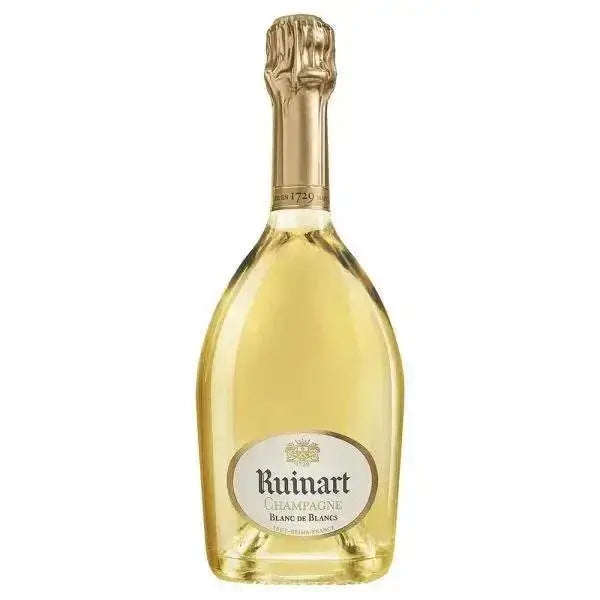
Blanc de Blancs means the champagne is made entirely from white grapes — in Champagne, that is Chardonnay. Blanc de Noirs means white champagne made from black grapes, Pinot Noir and Pinot Meunier, pressed gently so no colour is drawn from the skins. Blanc de Blancs is typically leaner and more citrus-driven; Blanc de Noirs is broader and more red-fruited.
Both terms translate literally and unhelpfully — "white from whites" and "white from blacks" — which is why they confuse people standing in front of a shelf. The distinction is simply which grapes went in.
Most champagne is a blend of three grapes. Chardonnay is the white one, giving acidity, citrus and the capacity to age. Pinot Noir is black-skinned, giving structure, weight and red-fruit character. Pinot Meunier, also black-skinned, gives softness and approachability early.
A standard non-vintage brut blends all three. Declare one category on the label and you have narrowed the field deliberately — which is the point.
Four further grapes are permitted in tiny quantities — Arbane, Petit Meslier, Pinot Blanc and Pinot Gris — and you will occasionally see them in a bottle marketed on that rarity.
The colour in red wine comes from skin contact, not from the juice, which runs pale in almost every grape. Press black grapes gently and draw the juice off the skins quickly, and you get white wine. That is exactly what happens in a Blanc de Noirs — and it is also why rosé champagne exists, made either by allowing brief skin contact or by blending in a little still red wine.
| Blanc de Blancs | Blanc de Noirs | |
|---|---|---|
| Grapes | Chardonnay only | Pinot Noir and/or Pinot Meunier |
| Heartland | Côte des Blancs | Montagne de Reims, Vallée de la Marne |
| Body | Lighter, more precise | Fuller, rounder |
| Flavour | Lemon, green apple, chalk, almond | Red apple, strawberry, brioche, spice |
| Acidity | Higher | Softer |
| Ageing potential | Excellent — develops nuttiness and honey | Good, but generally shows well earlier |
| Best as | Aperitif, with shellfish or caviar | With food, or in cooler weather |
Choose Blanc de Blancs when champagne is the opening act. Its acidity and cut make it the better aperitif, and it is the classic partner for oysters, shellfish and caviar — salt and high acid flatter each other. It is also the style that rewards cellaring most reliably, moving from citrus towards hazelnut and honey over a decade.
Choose Blanc de Noirs when champagne has to hold its own against food, or when the weather is against you. The extra body copes with roast chicken, charcuterie, mushroom dishes and hard cheese in a way a lean Chardonnay cuvée can struggle with. It tends to feel more generous on a cold evening.
Neither is better. They are different tools, and the honest test is what you are eating and when you are drinking it.
No. You will see Blanc de Blancs on sparkling wines from elsewhere in France, from England and from further afield. Outside Champagne the phrase still means "from white grapes", but the grape itself may not be Chardonnay — so it tells you less about the style than it does on a champagne label.
Both show best at 8–10°C, warming to 10–12°C for older or prestige bottles where more aroma is worth coaxing out. Serve Blanc de Blancs a touch cooler than Blanc de Noirs if you are pouring both. Use a white wine glass or a tulip rather than a narrow flute — you lose almost nothing in bubbles and gain a great deal in aroma.
White from whites — champagne made entirely from white grapes, which in Champagne means Chardonnay. It is typically lighter and more citrus-driven than a blended cuvée.
White from blacks — white champagne made from black-skinned grapes, Pinot Noir and Pinot Meunier. The juice is drawn off the skins quickly so no colour is extracted.
Blanc de Blancs generally ages longer and more reliably, its higher acidity carrying it towards nutty, honeyed flavours. Blanc de Noirs tends to show well earlier.
Not necessarily. Dryness is set by the dosage — brut, extra brut and so on — not by the grape. Blanc de Blancs often tastes drier because of its higher acidity, even at the same sugar level.
Browse Blanc de Blancs and Blanc de Noirs, or see the full champagne range. Buying one of each and tasting them side by side is the fastest way to learn which you prefer. More champagne answers are on our questions answered page.
Deliveries are to over-18s only under our Challenge 25 policy. Please drink responsibly.