
Your Cart is Empty


- Champagne
- Gifts & Hampers
- Whisky & Spirits
- Wine
- Caviar & Gourmet
- Same-Day Delivery
- Beer
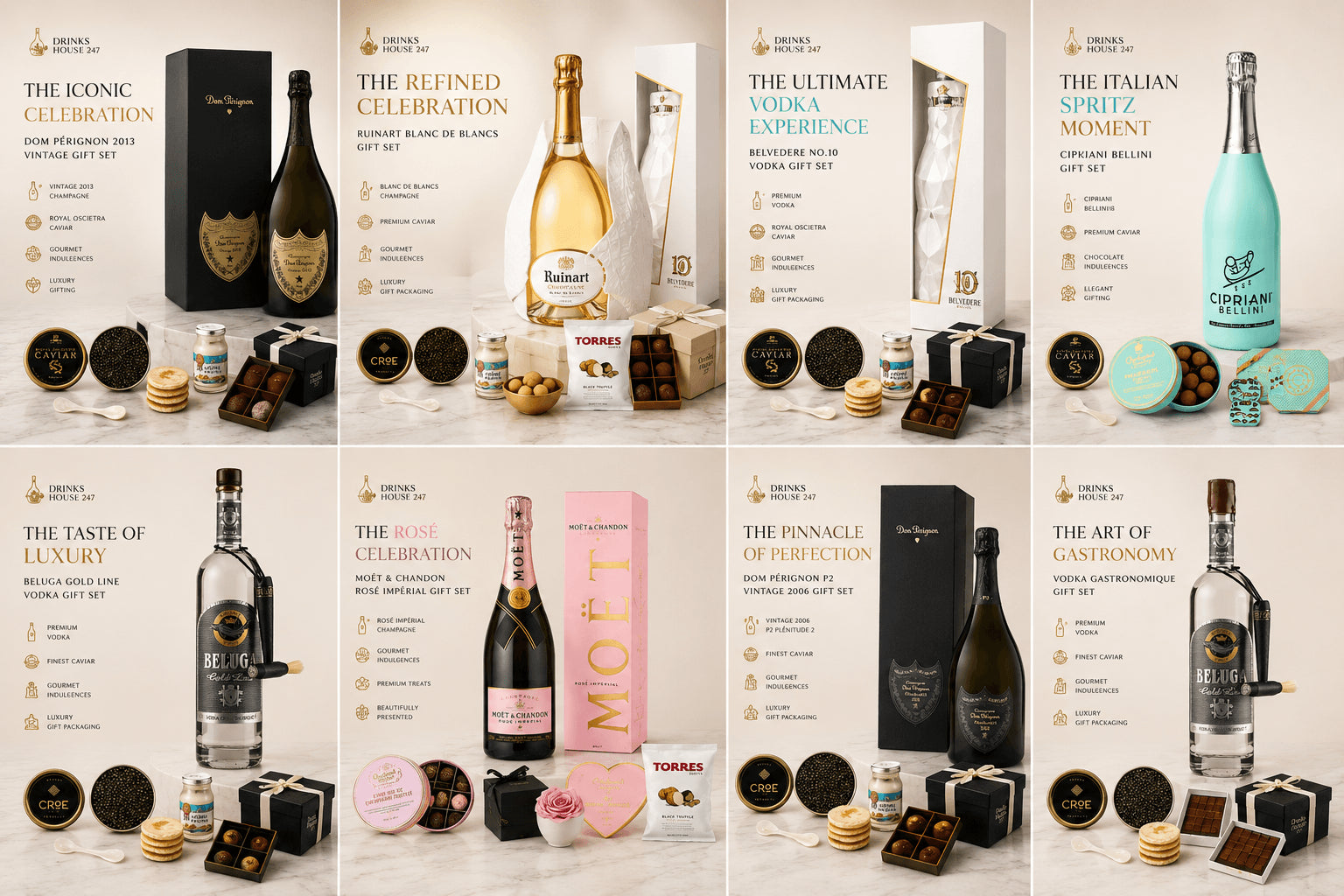
Short answer: Most champagne is non-vintage (NV) — a blend of grapes from multiple years, made to taste the same every time. A champagne is only vintage if the label states a specific year, such as "2013" or "2015." No year on the label means it's non-vintage, regardless of how the bottle looks or how much it costs.
Look at the front label. If you see a four-digit year printed there, it's vintage — that bottle was made entirely from grapes harvested in that single year. If there's no year, or the label says "NV" explicitly, it's non-vintage.
A few examples to make this concrete:
Some champagne houses make both. Moët & Chandon's Brut Impérial is non-vintage, while their Grand Vintage line carries a year. If you're comparing two bottles from the same producer, checking for a year is the fastest way to tell them apart.
Vintage and non-vintage aren't just labels — they're made differently, on purpose:
Non-vintage champagne is a deliberate blend of reserve wines from several harvests, sometimes going back many years. The winemaker's job is consistency: a bottle of Veuve Clicquot Yellow Label should taste essentially the same whether you buy it this year or in five years. This is the house's signature style, engineered to repeat.
Vintage champagne is only made in years the house considers good enough to bottle alone. Many producers skip vintage releases entirely in mediocre years — some declare a vintage only three or four times a decade. By law, vintage champagne must age on its lees for a minimum of three years before release (compared to 15 months for non-vintage), and premium houses often age it far longer.
Not automatically — they're built for different things. Non-vintage is designed to be reliably good and repeatable, which makes it the right choice for most everyday drinking and gifting. Vintage is designed to express something specific about one growing season — it can be more distinctive, more age-worthy, and more expensive, but "better" depends on whether you want consistency or character.
| Non-Vintage (NV) | Vintage | |
|---|---|---|
| Label | No year shown | Year shown (e.g. "2015") |
| Made from | Blend of multiple harvests | Single harvest only |
| Minimum ageing | 15 months on lees | 3 years on lees |
| Made every year? | Yes, consistently | Only in years the house declares |
| Best for | Everyday drinking, reliable gifting | Milestone occasions, collecting |
Browse our full champagne collection — both non-vintage house styles and rare vintage releases, delivered same-day across London and next-day UK-wide.
Please enjoy responsibly. drinkaware.co.uk
Comments will be approved before showing up.