
سلة التسوق الخاصة بك فارغة


- الشمبانيا
- مجموعات الهدايا
- الارواح
- خمر
- الزهور والشوكولاتة
- المشروبات الغازية
- البيرة وعصير التفاح
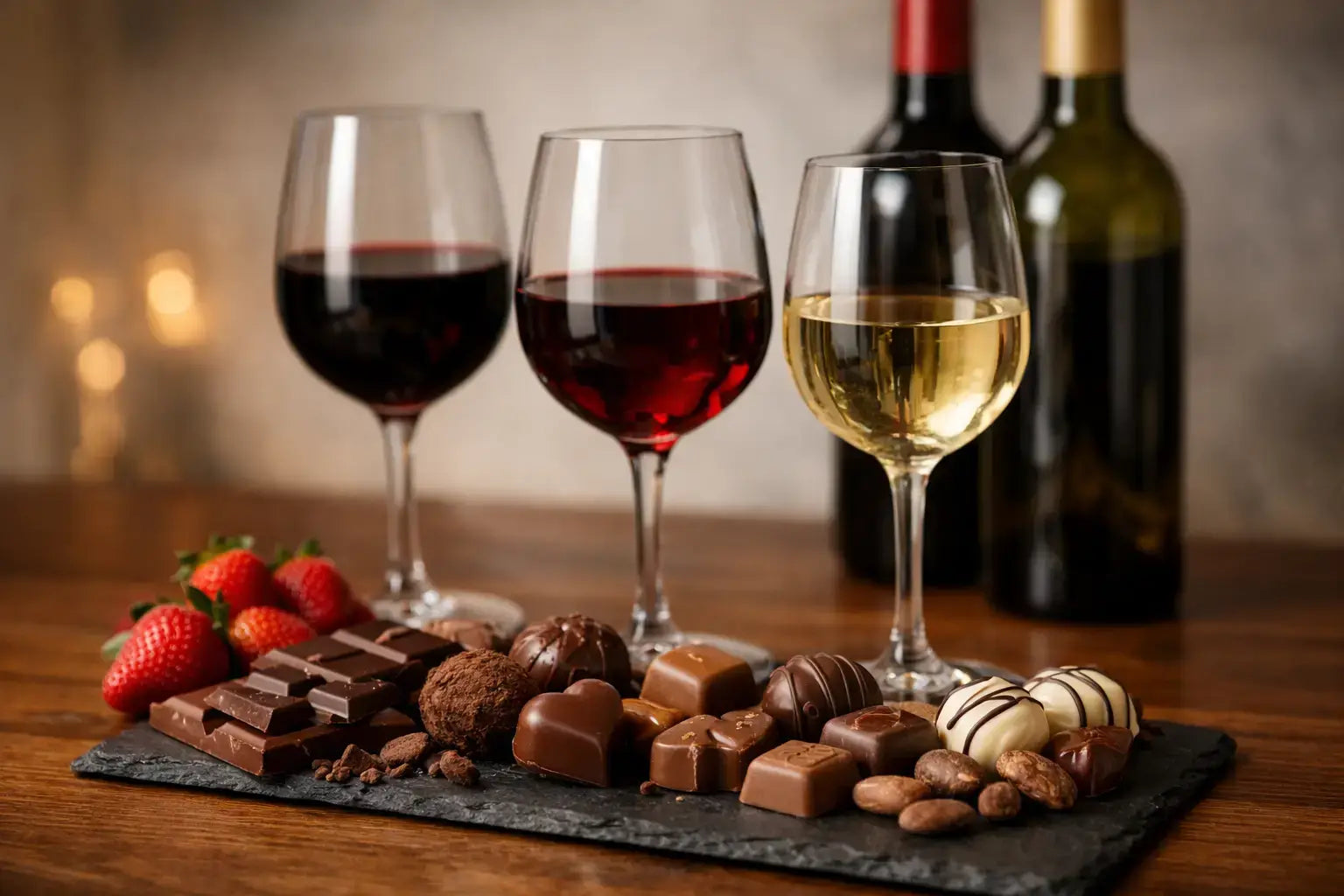
Chocolate can make a good wine look flat in seconds. If you are wondering which wine goes with chocolate, the first thing to know is that sweetness matters more than colour, price or prestige. Get that balance wrong and even an expensive bottle can taste sharp, thin or oddly bitter next to a square of chocolate.
The short answer is usually a sweeter wine than most people expect. Dry reds are often the first bottle people reach for, especially for dinner parties or gifting, but chocolate tends to exaggerate tannin and acidity. That is why a big Cabernet that works beautifully with steak can feel hard work with a truffle.
A better rule is to match the weight and sweetness of the wine to the style of chocolate. Milk chocolate needs something soft and rounded. Dark chocolate can handle richer, deeper wines. White chocolate, because of its creamy sweetness, often works best with fresh sparkling styles or lusciously sweet dessert wines. Once you think in terms of sweetness, bitterness and texture, the pairing gets much easier.
Chocolate is not a neutral dessert. It brings sugar, cocoa fat and often a bitter edge from cocoa solids. That combination changes how wine tastes on the palate. A dry wine can suddenly seem austere. Fruit can disappear. Alcohol can feel hotter.
That is why the old idea that "red wine and chocolate" always works is too broad to be useful. Sometimes it does work, especially with the right dark chocolate and the right bottle. Quite often, though, fortified wines, late harvest styles and sweeter sparkling wines are the smarter choice.
There is also a difference between eating a plain chocolate bar and serving a chocolate dessert. A silky mousse, flourless torte or chocolate-covered strawberries all bring extra textures and ingredients into play. Cream, fruit, salt and nuts can all shift the best match.
Milk chocolate is sweet, creamy and usually lower in cocoa bitterness, so it needs a wine with enough fruit and softness to keep up. Ruby Port is one of the safest choices. It has ripe berry fruit, enough sweetness, and a richness that feels natural with smooth milk chocolate.
If you want something less fortified, a sweet red such as Brachetto can work very well. It is lightly sparkling, perfumed and fruit-led, which keeps the pairing from feeling heavy. This is a smart option if you are serving chocolate gifts, chocolate truffles or a casual after-dinner spread rather than a formal dessert.
A softer, fruit-forward red can work in some cases, but only if it is low in tannin and not too dry. Think more plush and juicy, less oak-driven and powerful. Even then, it is a compromise compared with Port or a dessert wine.
Dark chocolate is where red wine fans have more room to play. The higher cocoa content brings bitterness and depth, so richer wine styles make more sense. Vintage Port, LBV Port and Banyuls are classic choices because they have concentration, dark fruit and sweetness that can stand up to intense cocoa.
If the chocolate is around 70 per cent cocoa and not overly sweet, some full-bodied reds can work. Zinfandel, Amarone and certain ripe Syrah styles can be successful because they bring bold fruit and warmth. But this is where it depends. If the chocolate is very bitter, a dry red may still come across as harsh. If the wine is too tannic, the pairing can turn metallic.
For very dark chocolate, especially bars above 80 per cent cocoa, a fortified wine usually remains the safer bet. The extra sweetness smooths the bitter edge rather than fighting it.
White chocolate is sweeter and more buttery than many people realise, so pairing it with a dry, crisp wine can leave the wine tasting sour. Moscato d'Asti is a strong option because it is light, aromatic and gently sweet. The fizz also helps cut through the richness.
A late harvest Riesling can work just as well, particularly if the white chocolate includes citrus, vanilla or fruit. The acidity keeps the combination lively, while the sweetness stays in balance. If you are serving white chocolate cheesecake or white chocolate with raspberries, this style often lands better than a red.
Once chocolate includes praline, hazelnut, caramel or sea salt, the best pairing often shifts towards richer dessert wines and tawny styles. Tawny Port is excellent here because of its nutty, toffee-like character. It picks up caramel notes naturally and feels more integrated than a fruit-heavy wine.
Pedro Ximenez sherry is another strong choice, particularly with salted caramel chocolate desserts. It is intensely sweet, raisiny and concentrated, so a little goes a long way. This is not the bottle for every guest, but for the right dessert it can be outstanding.
Desserts add another layer because they are often sweeter than the chocolate itself. A chocolate fondant, for example, is richer and warmer than a plain square of dark chocolate. That usually calls for a wine with both sweetness and body, such as Port or Banyuls.
Chocolate mousse is lighter, so a gently sparkling sweet wine can work better than something dense. Brachetto and Moscato are both useful here, especially if you want the pairing to feel elegant rather than heavy.
For a flourless chocolate cake, look at structure. It is dense, intense and often slightly bitter, so Vintage Port, Amarone or a rich sweet red can all make sense. If there is berry compote on the plate, fruit-led wines tend to shine. If there is salted caramel, tawny or Pedro Ximenez often pull ahead.
Chocolate strawberries are a simpler case. Milk chocolate strawberries are easy with rosé fizz or Moscato. Dark chocolate strawberries can work with ruby Port or a juicy red with low tannin. This is one of the few places where a sparkling rosé can genuinely outperform a traditional still red.
Dry Champagne with sweet chocolate can be awkward. The contrast often strips the wine of its fruit and leaves only acidity. That does not mean sparkling wine is off the table, only that style matters. Demi-sec or sweeter sparkling wines are far better bets than bone-dry options.
Very tannic reds are also risky. Young Cabernet Sauvignon, heavily oaked Bordeaux blends and firm Nebbiolo can all feel severe with chocolate. They may sound impressive on paper, but on the palate they often lose their charm.
Crisp dry whites can struggle too, unless the dessert includes fruit that gives the wine something to hold on to. A dry Sauvignon Blanc with a chocolate tart is rarely the bottle anyone asks for a second glass of.
If you need a fast answer, match by confidence level. For the safest all-round pairing with mixed chocolates, choose ruby Port. For luxury dark chocolate, choose Vintage Port or Banyuls. For white chocolate or fruit-led chocolate desserts, choose Moscato d'Asti or late harvest Riesling. For caramel and nutty chocolates, choose tawny Port.
That matters when you are buying for an occasion rather than building a sommelier-style tasting. A host gift, birthday hamper or last-minute dinner bottle needs to work without too much explanation. In those cases, versatility beats theory.
If you are ordering for guests with different tastes, it can even make sense to skip the dry red entirely and go for one sweeter bottle that is designed to pair. It is the more reliable route, and frankly the one most people enjoy more.
The easiest way to think about chocolate and wine is this: the wine should be at least as sweet as the chocolate, and ideally bring either enough fruit or enough richness to match its texture. That one rule saves a lot of disappointing pairings.
You can break it occasionally. A ripe, low-tannin red with dark chocolate can be excellent. A sparkling rosé with chocolate-covered strawberries can feel spot on. But if you need a dependable answer to which wine goes with chocolate, sweeter styles, fortified wines and carefully chosen dessert bottles usually win.
If the bottle is for tonight rather than next week, it is worth choosing the wine with the chocolate in mind, not just the label. A pairing that tastes right will always feel more premium than one that merely looks the part.
سيتم الموافقة على التعليقات قبل ظهورها.