
سلة التسوق الخاصة بك فارغة


- الشمبانيا
- مجموعات الهدايا
- الارواح
- خمر
- الزهور والشوكولاتة
- المشروبات الغازية
- البيرة وعصير التفاح
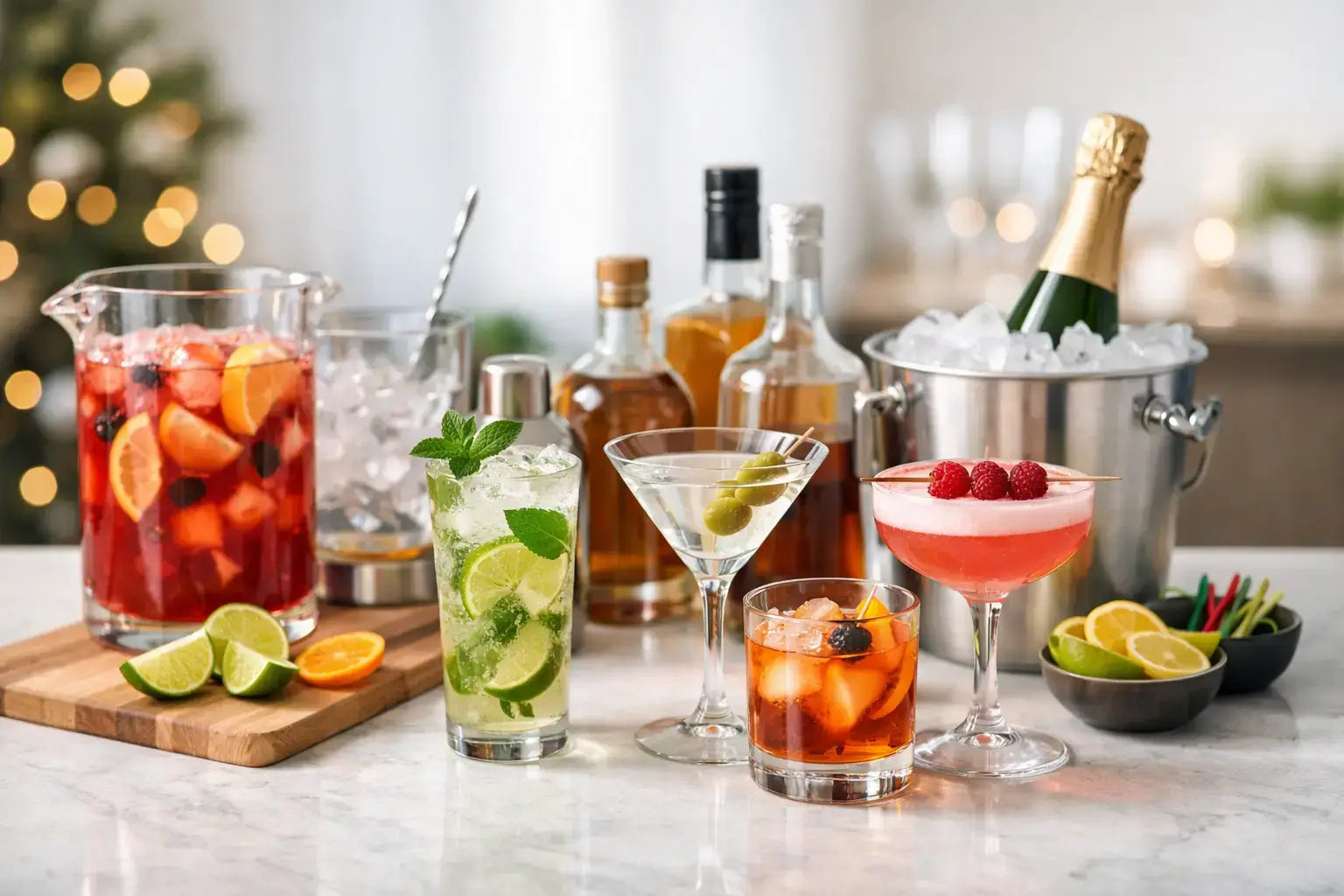
A party rarely falls flat because of the music. It usually happens when the first bottle empties too early, the fridge is full of the wrong things, or half the table has nothing they actually want to drink. A good party drinks planning guide is less about buying more and more about buying well - the right mix, the right quantity, and the right format for the occasion.
Hosts tend to make the same two mistakes. They either overcomplicate the drinks list and spend the evening playing bartender, or they underbuy and end up panic-ordering after the first round. The smart middle ground is simpler: match the drinks to the guest list, the time of day, the food, and how long people are likely to stay.
Before you think about Champagne, cocktails or ice, work out who is actually coming. Twenty colleagues stopping by after work drink differently from twenty friends arriving for a Saturday birthday dinner. A mixed-age family celebration will need a broader range than a late-night house party, and a warm garden gathering usually gets through more chilled drinks than a winter drinks reception.
Headcount matters, but guest type matters more. If your crowd leans towards wine, there is little point overloading on beer. If you know a few guests do not drink alcohol, soft drinks should be planned properly rather than treated as an afterthought. Premium hosting does not mean serving the most expensive bottle on the shelf. It means making sure everyone has a good option from the moment they arrive.
As a rule, ask four quick questions. How many people are coming? How many hours will the event last? Is food being served? Is the drinks menu casual or more celebratory? Those answers shape everything else.
For most parties, a useful estimate is one to one-and-a-half drinks per person for the first hour, then one drink per person for each following hour. That is not exact, because some groups drink slowly and others move quickly, but it gives you a realistic starting point.
A two-hour early evening gathering for 12 guests might need around 18 to 24 drinks in total, plus soft drinks and water. A five-hour birthday party for 25 guests will need far more depth, especially if people are not leaving early and there is no nearby option for a quick top-up.
Wine is often easiest to plan because bottles convert cleanly. A standard 75cl bottle gives roughly six small glasses or five more generous ones. If wine is the main serve, allow about half a bottle per person for a shorter event and up to a bottle per person for a longer evening. That does not mean every guest drinks a full bottle, but it covers the natural imbalance when some drink only one glass and others drink several.
Sparkling wine and Champagne disappear faster than many hosts expect. People pour them generously, top up often, and treat them as part of the celebration rather than a single arrival drink. If you are serving fizz for a toast only, one bottle for six to eight guests usually works. If it is a core part of the evening, plan more generously.
Beer and cider are more predictable for casual events. Two to four bottles or cans per person is a reasonable range depending on event length and whether wine and spirits are also available. Spirits work differently again. A 70cl bottle gives around 14 to 16 standard serves, depending on pour size. They can be cost-effective for bigger groups, but only if you keep mixers and garnishes practical.
The best party drinks planning guide does not tell you to stock everything. It tells you to edit. A strong party menu usually has one sparkling option, one or two wines, one beer or cider choice, one spirit setup, and a proper alcohol-free selection.
For a birthday, engagement, anniversary or New Year gathering, sparkling wine earns its place because it sets the tone quickly. For dinner parties, wine does more of the heavy lifting. For casual house parties, beer, cider and simple spirit mixers tend to move fastest. Corporate drinks and smart celebrations benefit from a cleaner range - fewer options, better quality, quick service.
If you want a premium feel without turning your kitchen into a bar, avoid overly ambitious cocktail lists. One batched cocktail can work well. Anything beyond that depends on how much effort you want to put in while hosting. There is a trade-off here. A wider drinks range feels generous, but it also raises cost, clutter and leftover risk.
A reliable split for a mixed adult crowd is to put wine and fizz at the centre, then support with beer, spirits and alcohol-free alternatives. If you are serving food, wine should usually take the lead. If the event is stand-up and social, beer and sparkling can take more share.
Red and white wine should both be offered unless the event is very small. Rosé is useful in warmer weather and at daytime gatherings, but it should not replace white wine unless you know your guests well. Champagne or quality sparkling wine works best when there is a defined celebratory moment. If there is no toast, prosecco-style easy drinking fizz may be the more practical choice.
For spirits, keep it clean and familiar. Vodka, gin and whisky cover most preferences. Rum works for certain crowds, but not every party needs it. Buy mixers that pair across categories, such as tonic, soda, cola and lemonade, so you are not left with half-used bottles of niche products afterwards.
Soft drinks deserve proper planning. Still water, sparkling water, one cola option, one clear fizzy option and one adult soft drink such as tonic or elderflower-style mixers usually cover the room well. If you have designated drivers, pregnant guests or anyone avoiding alcohol, a premium alcohol-free sparkling option makes the event feel better considered.
Standard bottles are easiest to manage, but larger formats can make sense for bigger celebrations. Magnums of Champagne or wine create impact and reduce the number of bottles you need to chill, open and clear away. They are especially useful for milestone birthdays, weddings and formal gatherings. The downside is less flexibility. If guest preferences shift, you are committed to a larger volume of one drink.
Temperature is often the detail that separates a rushed party from a polished one. White wine, rosé, sparkling wine and beer need to be cold before guests arrive, not cooling gradually in an overloaded fridge. Red wine should be slightly cool, not warm from a kitchen shelf. If your fridge space is limited, plan ahead with ice buckets, cool bags or a second chilling area.
Glassware also affects flow. You do not need specialist glasses for every drink, but you do need enough clean glasses that guests are not rinsing and reusing constantly. For larger events, a single versatile wine glass plus tumblers is usually the most efficient setup.
One reason drinks planning goes wrong is that people treat ordering as the final task rather than one of the first. If you are buying for a specific date, lock in the core order early, then leave room for a final top-up closer to the event once RSVPs settle.
This matters even more for premium bottles, large formats or gift-led occasions where presentation counts. If you are hosting in London and the numbers have changed at the last minute, fast delivery can rescue a party that has outgrown the original order. That is where a service such as Drinks House 247 becomes genuinely useful - not for random excess, but for covering shortfalls quickly without dropping the quality of the selection.
An after-work gathering needs speed and ease. Chill beer, white wine, sparkling wine and a couple of simple spirit mixers. A dinner party needs fewer categories but better pairings. A birthday at home usually needs the broadest selection because guests arrive with mixed expectations and stay longer.
For gifting-led celebrations, the drinks choice should feel occasion-appropriate. Champagne, fine wine and curated extras make more sense for anniversaries, milestones and congratulations. For casual hosting, familiarity usually beats rarity. There is no advantage in buying a complex bottle if no one at the party wants a second glass.
The right drinks plan is not the one with the longest shopping list. It is the one that fits the room, the budget and the pace of the event. Get that right, and hosting feels less like damage control and more like what it should be - easy, generous and ready when your guests arrive.
سيتم الموافقة على التعليقات قبل ظهورها.